Adhesion primers - quartz primer and concrete-contact before skim coat
Adhesion primer is the most skipped step in any renovation. Also the most expensive to skip.
On a smooth surface - cast concrete, glazed tiles, old gloss paint - skim coat has nothing to grip. The fine particles in the binder contract on drying and pull the layer inward. Without mechanical adhesion, the skim coat lifts and cracks. Sometimes weeks later, sometimes after a winter.
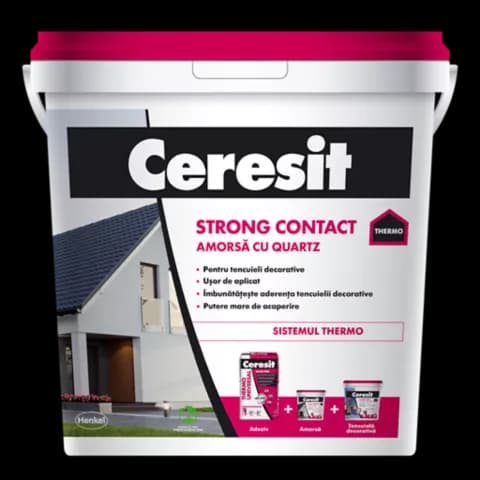
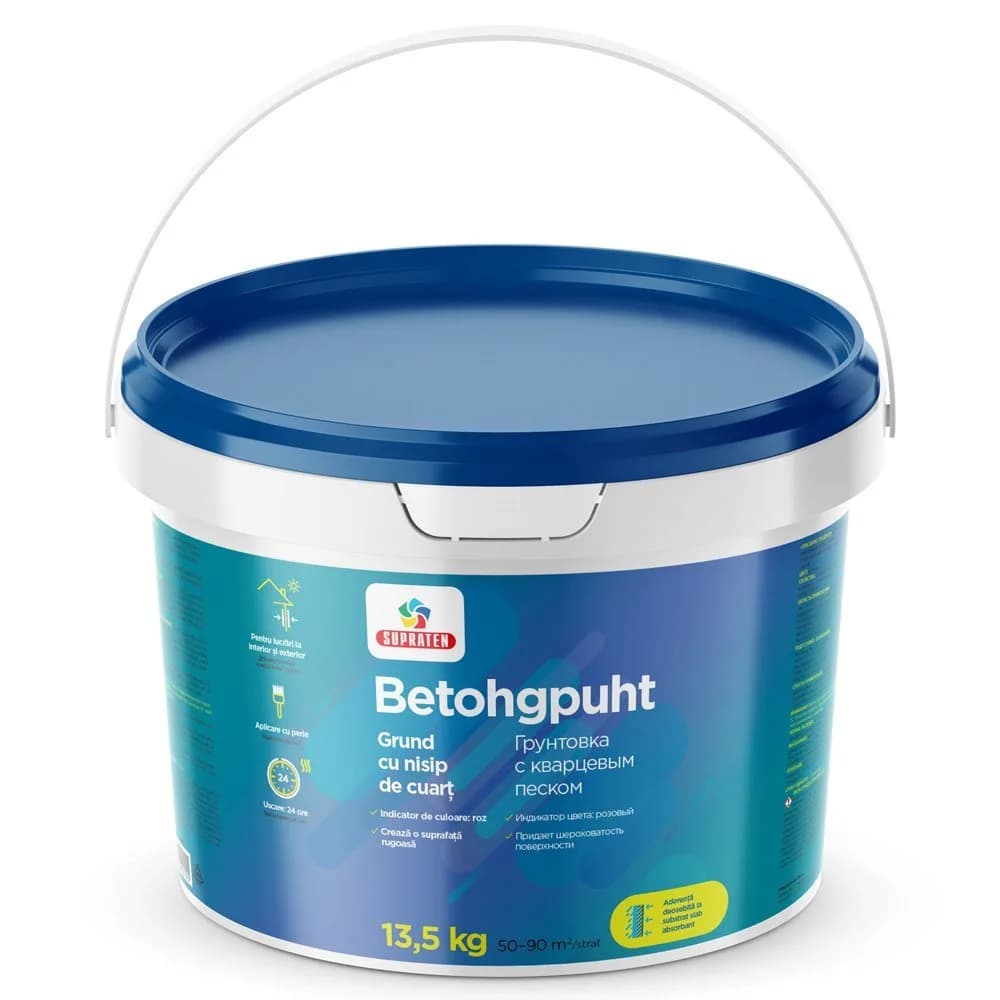
Quartz primer - a primer with fine sand particles in suspension. Brushed or rolled on, it creates a lightly abrasive surface layer. Skim coat then keys mechanically into that texture. The standard solution for smooth or low-absorption surfaces.
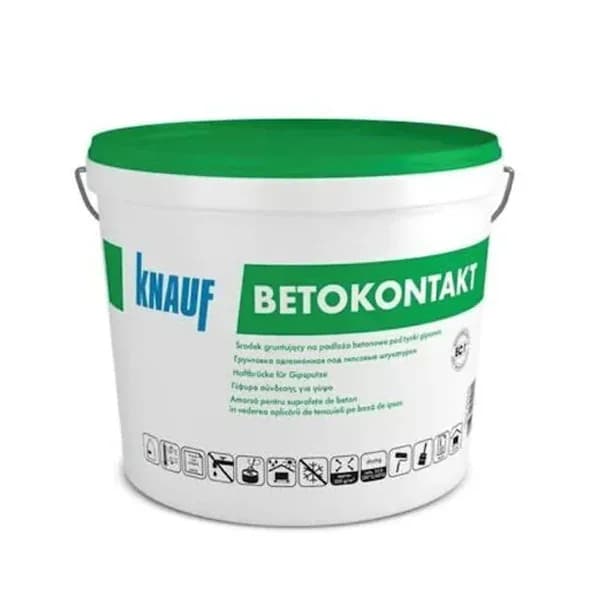
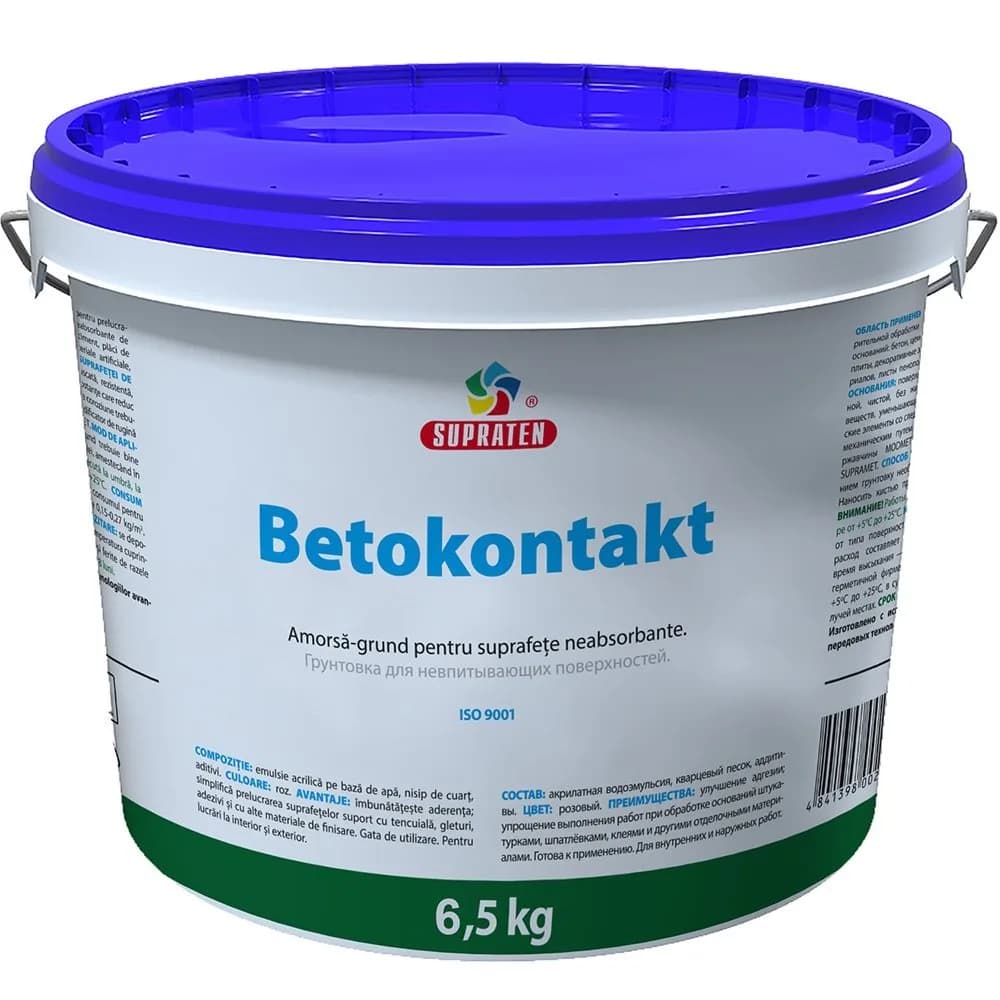
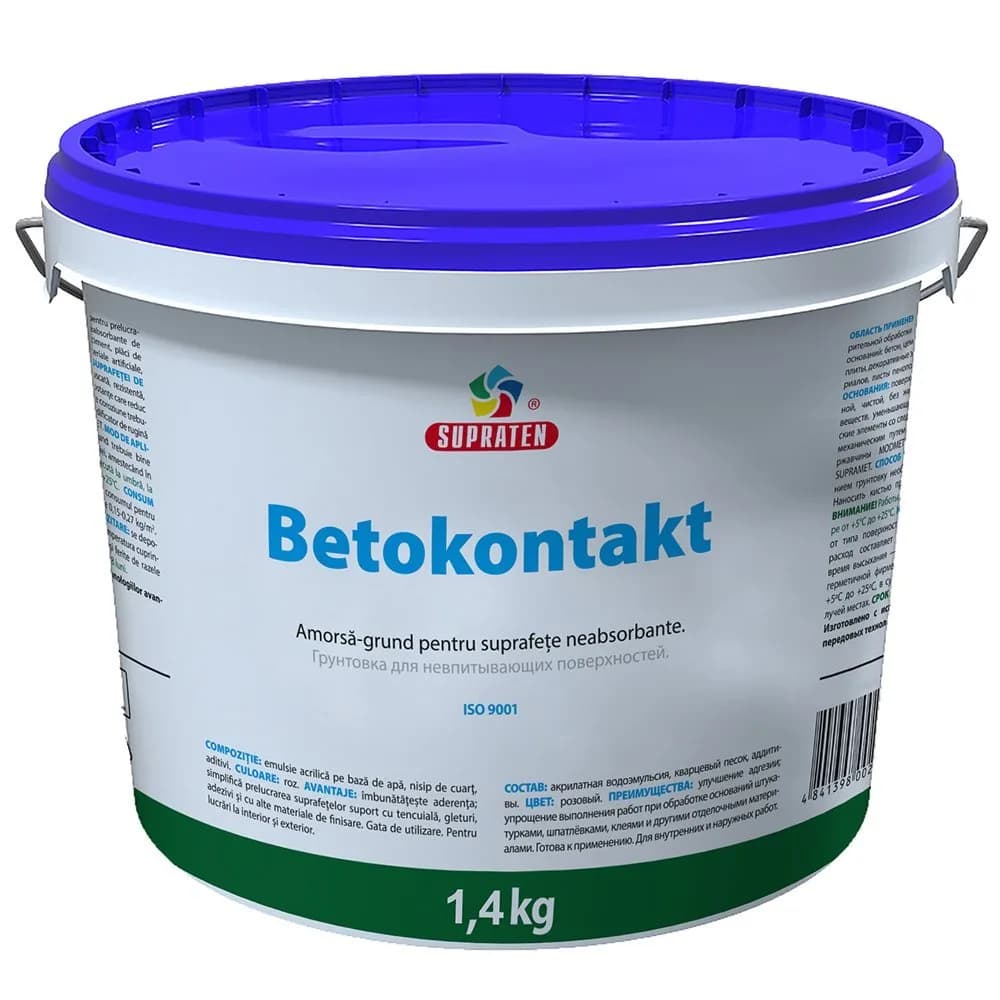
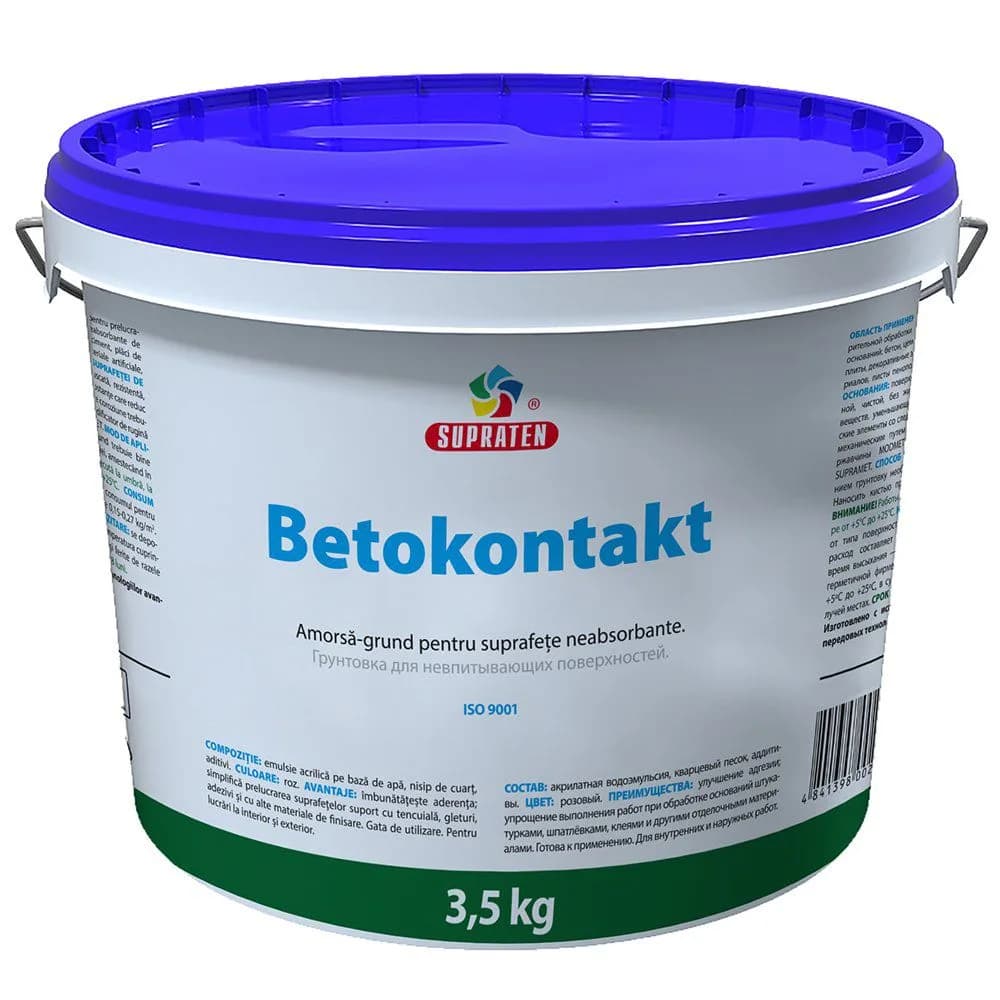
Concrete-contact - a more aggressive version, with larger particles and stronger grip. Used on cast concrete, floor tiles, glazed wall tiles and anywhere the surface is extremely smooth or non-absorbent. The distinctive pink or orange colour isn't decorative - it shows exactly where you've applied and where you've missed.
Standard acrylic primer - for surfaces with normal porosity. Seals, evens out uneven absorption and improves adhesion. Less aggressive than quartz, but sufficient on standard plaster or gypsum board.
Tradesmen who do lasting work don't skip this step. Not because it's on a checklist - because they've seen what a wall looks like when skim coat delamination starts.
Both are adhesion primers, but with different particle sizes. Quartz primer has fine granules, suited to surfaces with low absorption. Concrete-contact has larger granules for stronger grip - needed on cast concrete, floor tiles and glazed surfaces that absorb nothing. If water sits on the surface rather than soaking in, use concrete-contact.
If the old paint is matt and poorly bonded, the risk of delamination is high. If it's gloss or solvent-based, definitely not. The safe route: clean the surface, apply quartz primer, then skim coat. The primer cost is minimal compared to redoing the whole finish.
Yes. Quartz primer must be fully dry before skim coat goes on - otherwise the particles aren't locked and adhesion will be weak. Typically 2-6 hours at room temperature, but check the technical data sheet of the specific product.
Yes, especially on smooth or repaired surfaces. On cast concrete facades or surfaces with old gloss paint, decorative or exterior plaster needs an adhesion primer first. Without it, Moldova's freeze-thaw cycles will force delamination faster.
Depends on the product and surface porosity. On smooth non-absorbent surfaces the consumption is stated on the packaging. Porous surfaces absorb more. Apply one even coat without gaps - one proper coat beats two sloppy ones.