Construction pencils and markers for site marking
Cut the line you drew, not where you think it was.
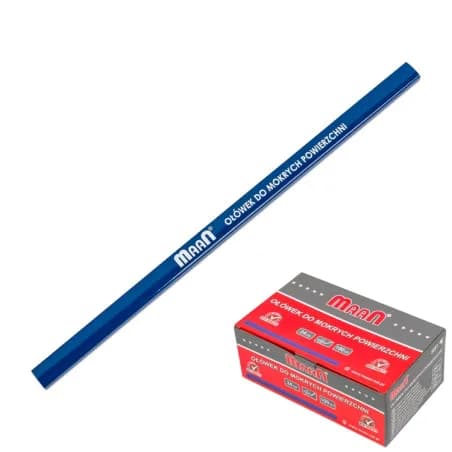
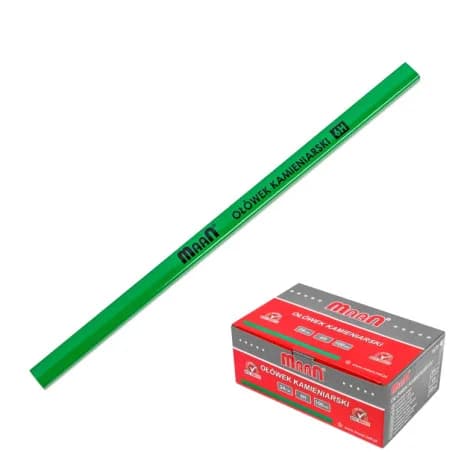
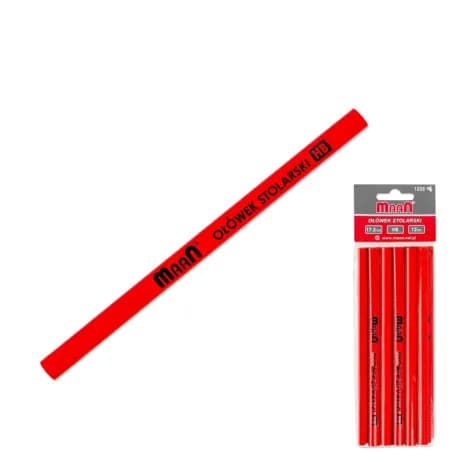
The flat carpenter pencil doesn't roll off a ladder or workbench - that's the whole point of the shape. Hard lead marks a thin line on wood, concrete and tile. On porous or damp surfaces, a pencil stops working - that's where a permanent marker or chalk line takes over.
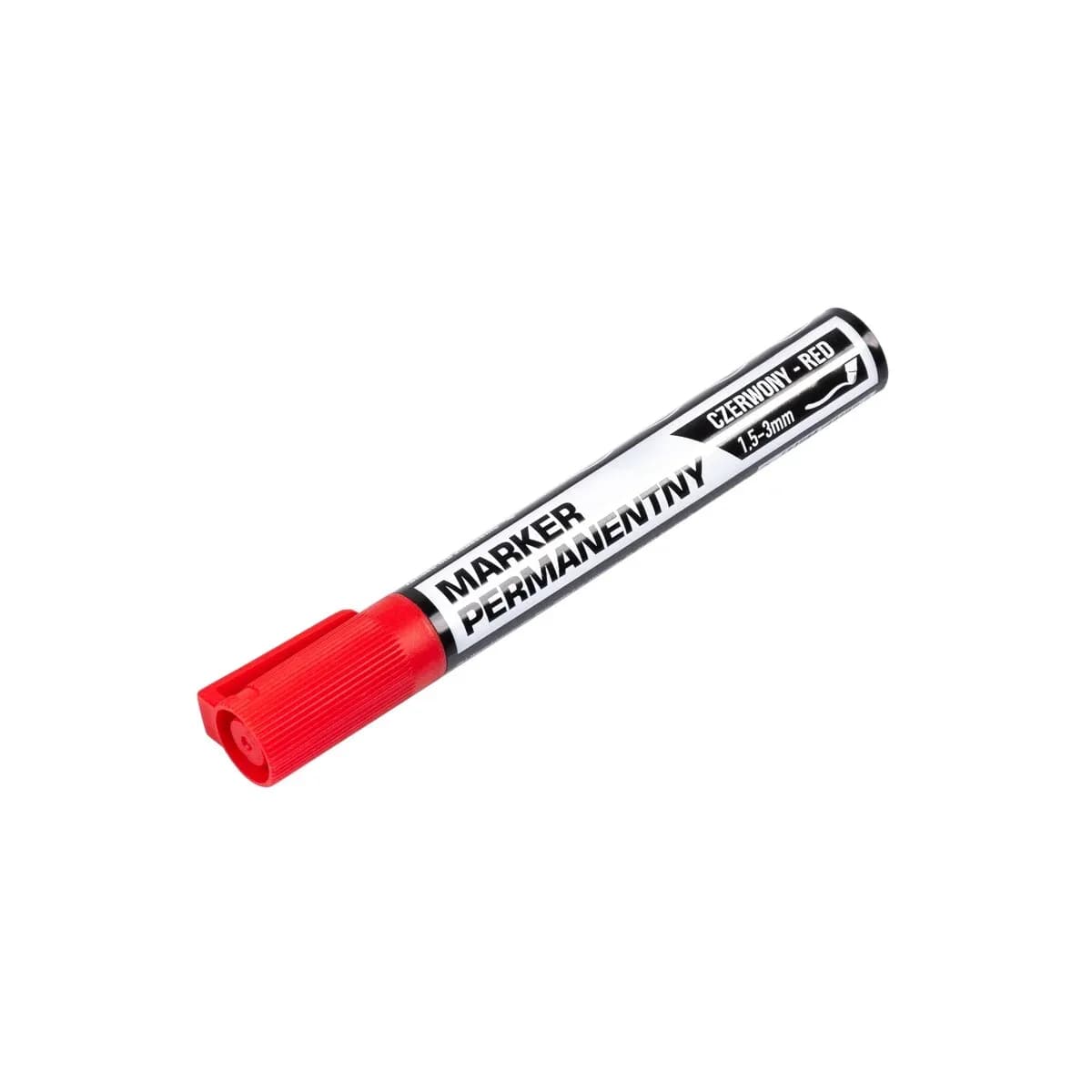
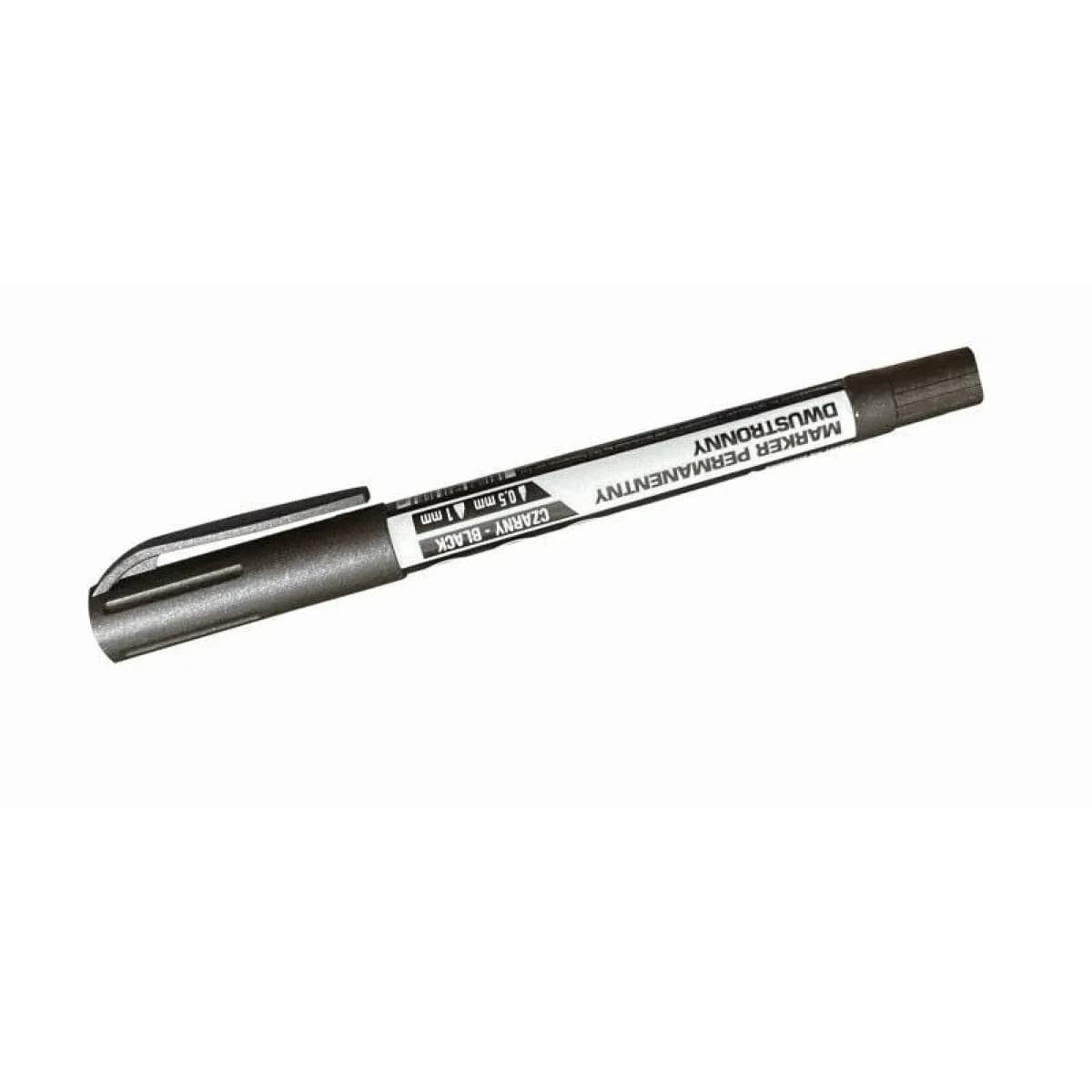
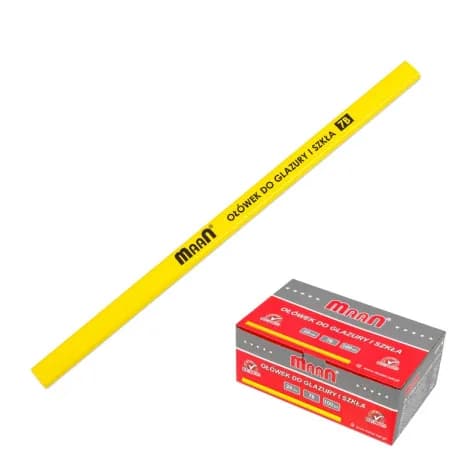
In stock: flat carpenter pencils with various lead grades, permanent markers for concrete, metal and wood, fluorescent marking pencils, chalk line reel for long straight lines.
Chalk line is the fastest tool on site for marking over 1 metre. Snap a 5-10 m line in 2 seconds - useful for tile layout, partition walls, gypsum board installation.
Don't save money on the pencil when working with hardwood flooring or cabinet joinery. An imprecise mark after the cut doesn't fix itself.
Thick-tipped permanent marker or a dedicated concrete marker - hard tip, resistant to dust and abrasion. A standard carpenter pencil won't leave a visible line on porous concrete.
Hard lead (H, 2H) gives a thin line that doesn't smudge - best for precise marking on wood and tile. Soft lead (B, 2B) marks thicker and more visibly - better on rough or textured surfaces.
A chalk line reel. Hook it at both ends, pull tight, snap. You get a straight line of any length in 2-3 seconds. Much faster than a rule for anything over about a metre.
Yes, but marker ink can bleed through thin paint. On plaster before painting - prime over the lines before applying the finish coat. On wood under varnish - marker can sometimes show through a clear coat.
Standard carpenter pencil is more durable - survives drops and knocks. Mechanical pencil is more precise and never needs sharpening, but the lead snaps under pressure or when dropped.