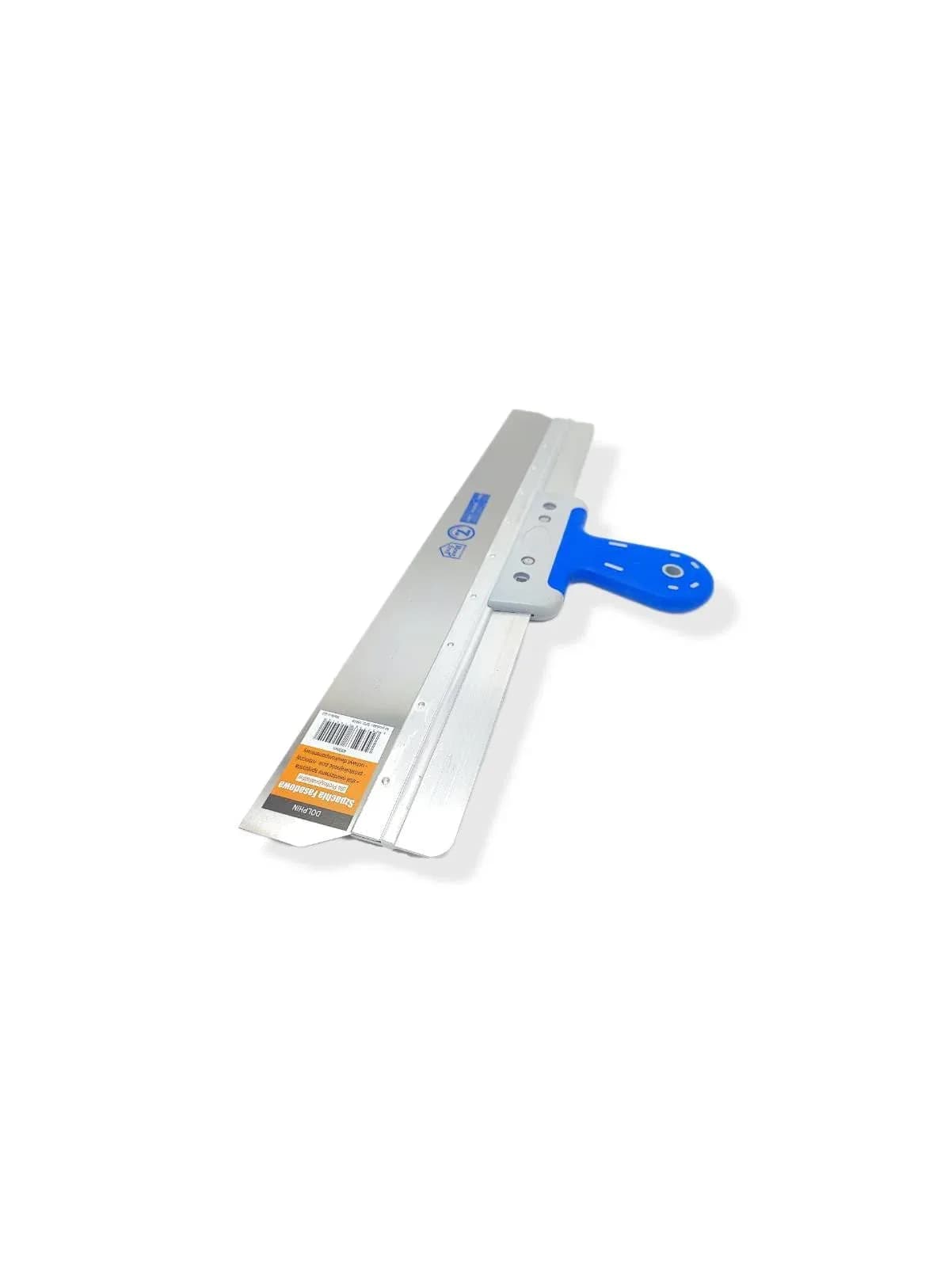
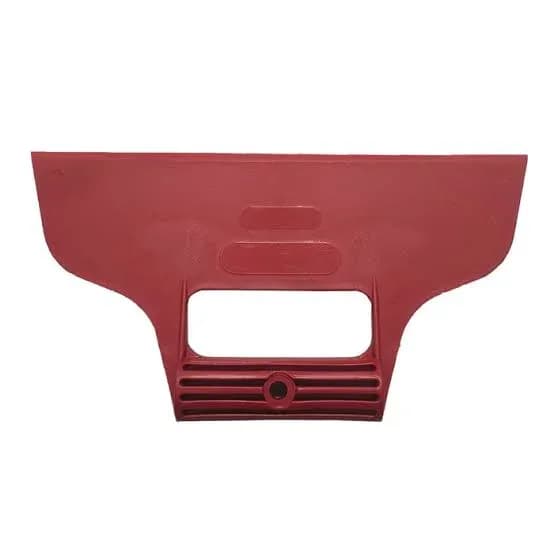
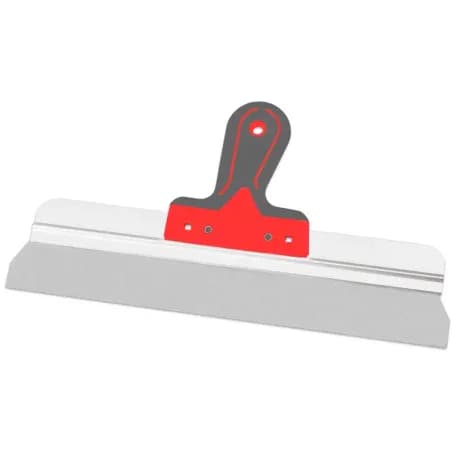
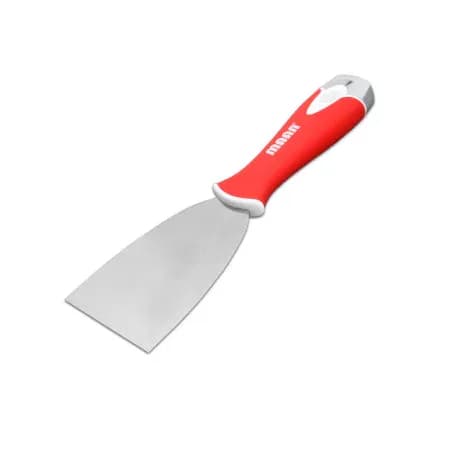
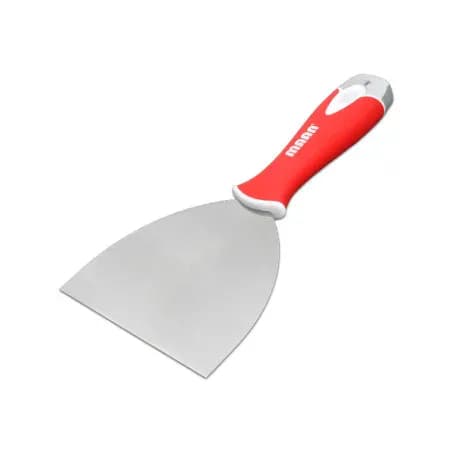
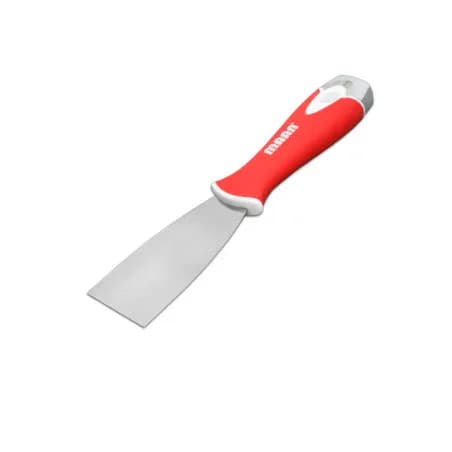
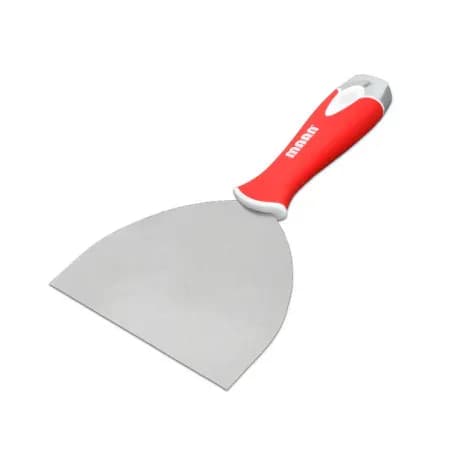
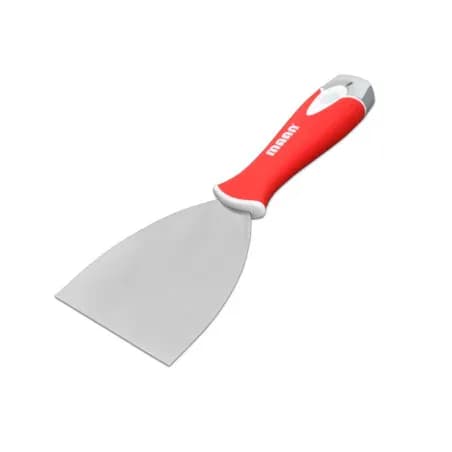
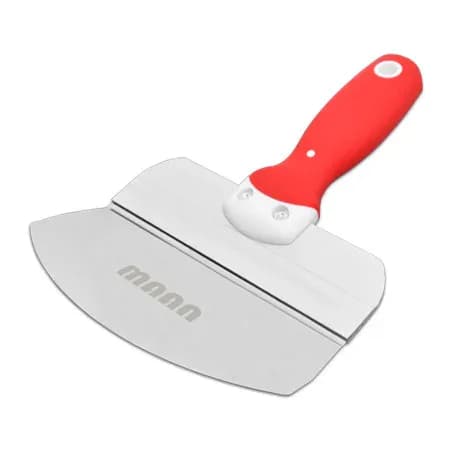
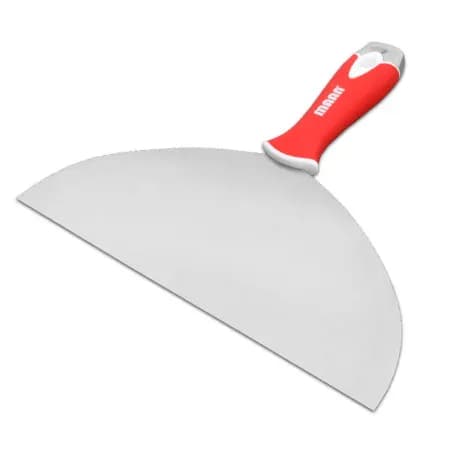
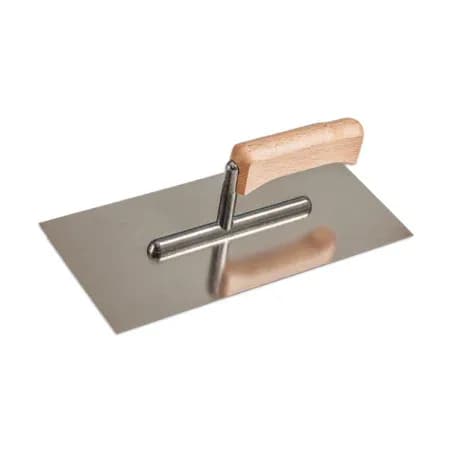
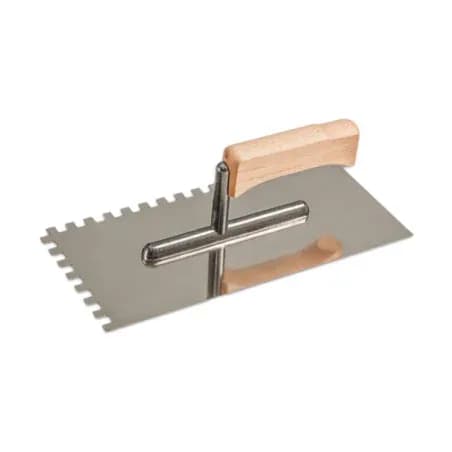
Spatulas for filler application and finishing - stainless and spring steel
A spatula flexes on the first pass across the wall. That's normal - it's spring steel. Or it stays bent after the first pass. That's cheap steel.
Stainless steel blade - corrosion-resistant, for cement-based mortars and water-based fillers. Smooth face doesn't hold residue when you wash it. Lasts years without rusting between jobs.
Spring steel blade - more flexible, applies finishing filler with fewer trowel marks. Plasterers prefer it for the final coat because the flex distributes pressure evenly. Rust-sensitive - wipe and dry after every use.
Width and application. 80-120mm - filling cracks, tight spots, scraping old paint. 200-300mm - medium-area filler application, edge blending. 400-600mm (wide skim blade) - final skim coat on large areas, minimum joining marks. Wider blade on final coat means fewer visible pass marks.
The handle matters more than you'd think. Wood - good grip but absorbs moisture. Rubber or bi-material - more comfortable for long sessions, doesn't slip with a wet hand. Check the fixing rivet isn't loose - a blade that wobbles can't be controlled.
Minimum 250mm for effective coverage, ideally 350-400mm. A wide blade distributes the material more evenly and leaves fewer pass marks. On the final finishing passes, plasterers use 400-500mm blades for a wall that barely needs sanding.
Spring steel for final coats - flex distributes pressure evenly and leaves fewer trowel marks. Stainless for base coats, paint removal and work with abrasive or corrosive materials. In practice, tradesmen keep both: stainless for rough work, spring steel for finish.
Immediately after work with water and a stiff brush - cement filler hardens in 20-30 minutes and becomes difficult to remove. After cleaning, wipe the blade dry, apply a thin coat of oil to spring steel to prevent rust. Stainless needs no extra protection.
Common causes: blade too narrow for the area (edge marks), uneven pressure on the pass, mix too thick or too thin, or a slightly deformed blade. Load less material and work with a wider blade on finishing coats.
Straight blade - standard for flat walls and ceilings. Slightly curved (convex) blade - for concave surfaces or internal corners. Most skim work is done with straight blades; curved is a specialist tool, not a replacement.