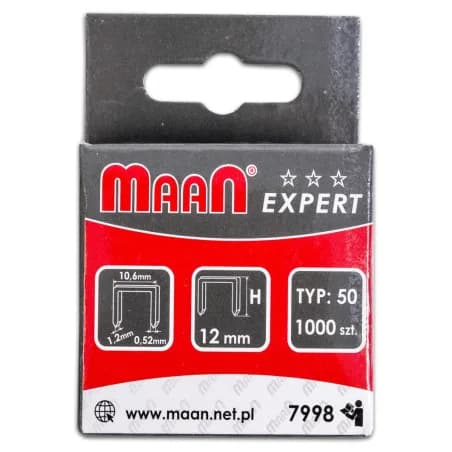
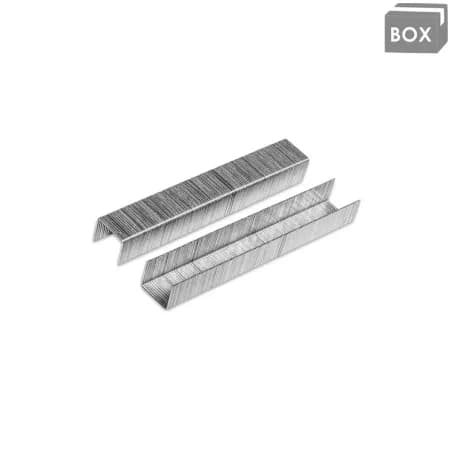
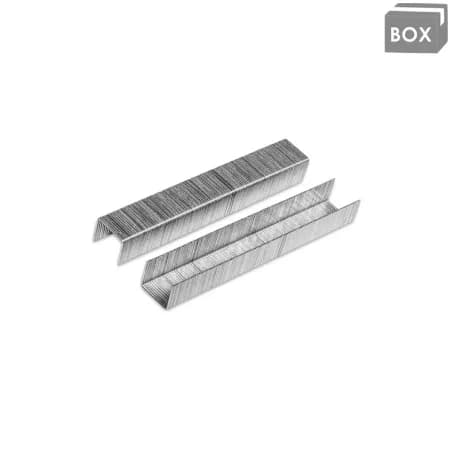
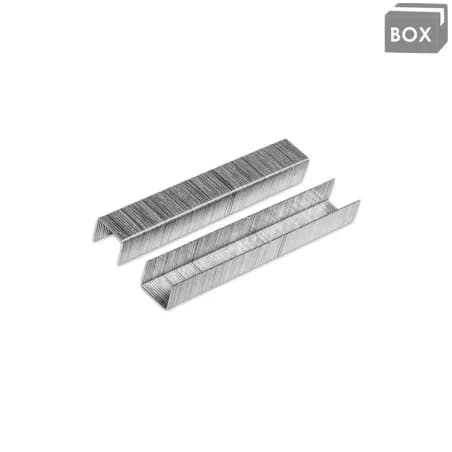
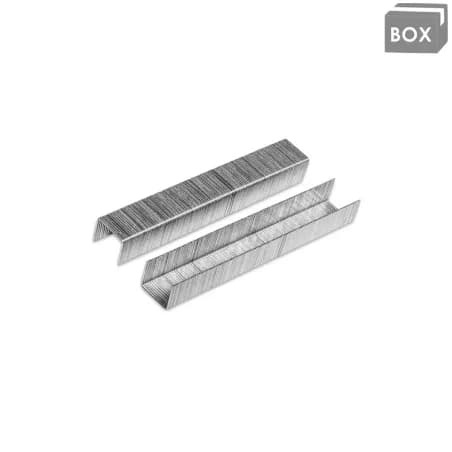
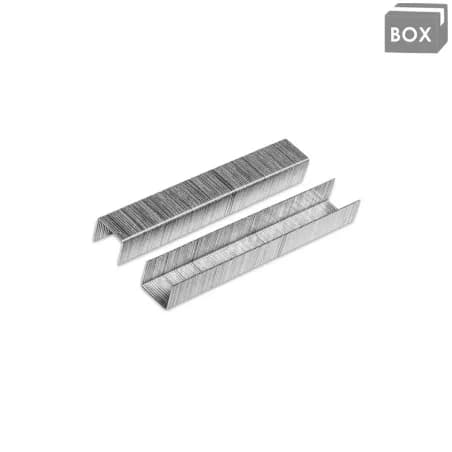
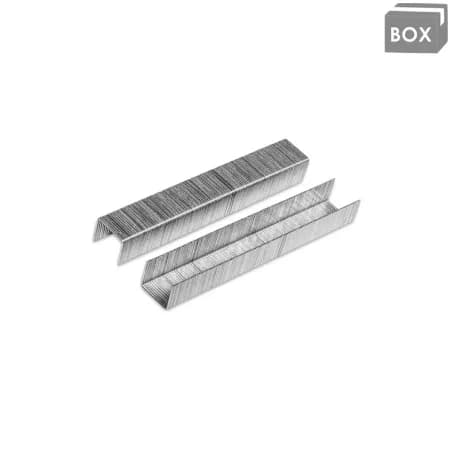
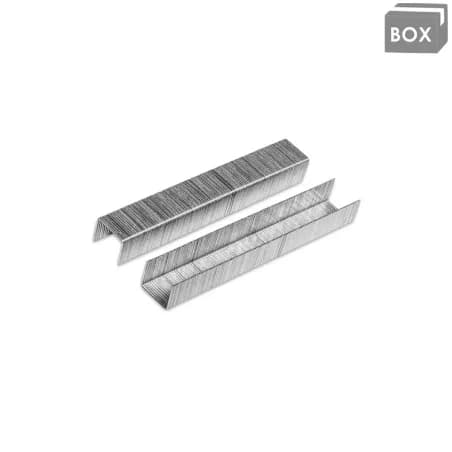
Staples for Construction, Upholstery and Installation Staplers
Wrong staple for your tool - won't load, loads crooked, or won't hold. Three seconds to check the type before buying.
Staples differ by leg shape (J, U, T), width and length. Your stapler takes one type - it's marked on the tool label or in the manual.
Type U staples (standard) - the most common, for manual and electric staplers. Fixing protective film, paper, card, packaging.
Type J staples (upholstery) - longer leg, wider crown. Fixes fabric, leather, upholstery material to wood or MDF frames.
Type T staples (brad nails) - small 15-40mm finish nails with a small head, for decorative trims.
Cable staples (insulated type) - plastic insulator between the staple body and the cable. For fixing electrical cable to timber without damaging the insulation.
Leg length = material thickness + 3-4mm grip in the substrate. For 5mm material - staple with 8-10mm legs.
The stapler is marked with the compatible staple series (e.g. 53, 140, T50) - these are international standards. Series 53 at 11.4mm width is the most common for Bosch, Stanley and Arrow construction staplers. Check the tool label or manual.
Minimum length = material thickness + 3-4mm grip in the base. Fabric over an 18mm timber frame: 10mm leg staple. Leather on 10mm MDF: 14-16mm leg staple. Too short doesn't hold, too long punches through the other side.
No. Standard metal staples cut or crush the cable insulation on impact. Use specialist insulated staples (coaxial or NYM type) with a plastic clip that protects the insulation.
Yes, if your stapler accepts stainless. Standard galvanised staples oxidise outside in damp conditions - leaving brown stains on light-coloured timber or fabric. For decking, pergolas and outdoor applications use stainless or hot-dip galvanised staples.
Depends on the model - from 84 to 5000 staples per load. Professional construction staplers hold 300-1000 staples. At normal working pace a 300-staple magazine lasts about 10-15 minutes.