Exterior wood protection: stop repainting the fence every year

Want to know what really kills a wooden fence or deck? Not time, not frost. It's the owner who grabbed a random can labeled "for wood", slapped one coat over grey boards, and never touched the end grain. One season later the coating peels in strips, the wood goes blue, and the owner swears the product was junk.
I've been finishing houses, fences and pergolas around Chisinau for 15 years. Here's the blunt truth: exterior wood lasts exactly as long as you let it last. Let's break it down without the mystery.
What actually destroys wood outdoors
Four enemies, and they tag-team.
UV rays. Sun burns out lignin, the natural glue in wood. The board greys first, then cracks. Only pigments give real UV protection. Clear coatings barely help here.
Moisture. Wood breathes, it pulls water in and lets it go. In winter the water trapped in the pores freezes, expands, and tears the fibers from inside. The Chisinau climate is a seesaw for timber: down to -15 in winter, up to +35 in summer. A cheap coating just gives up after two seasons.
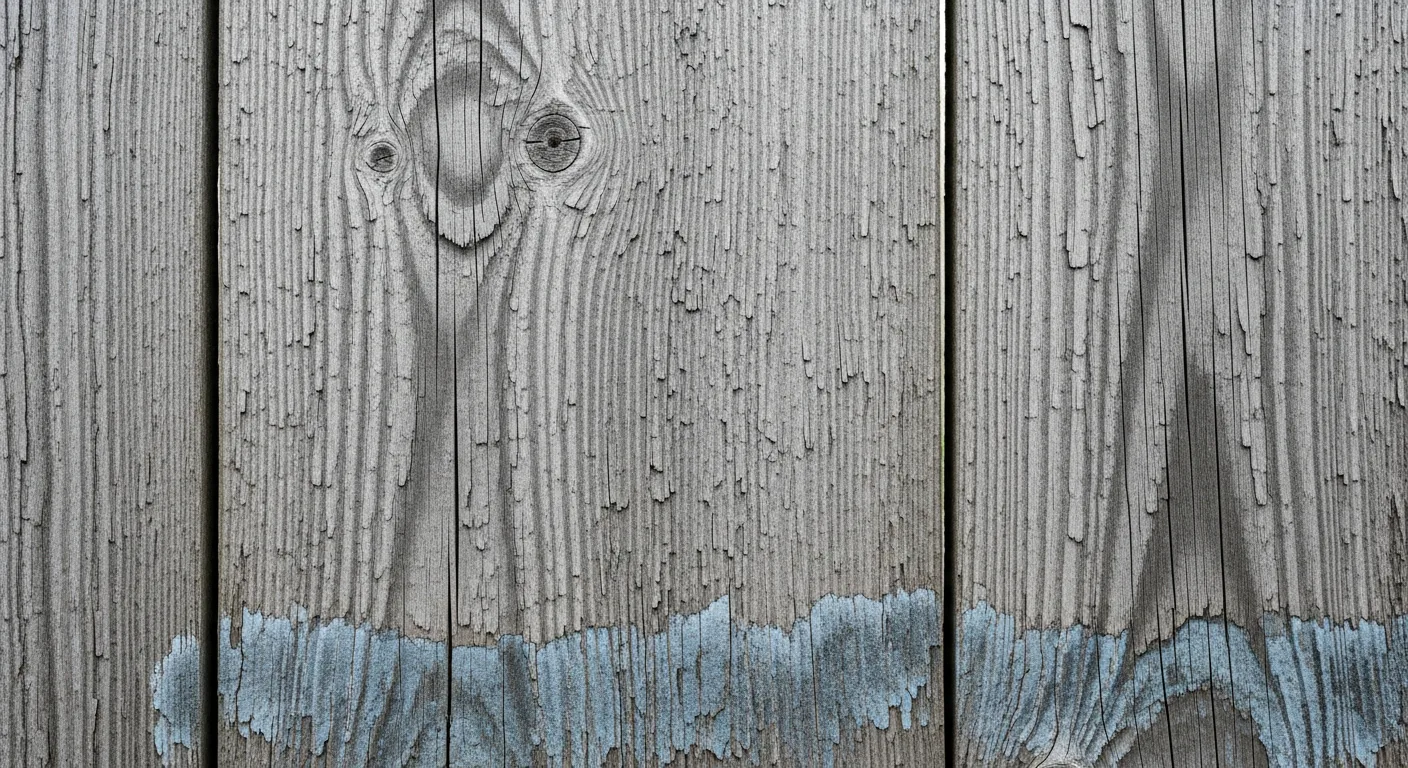
Fungus and blue stain. Spores land on damp wood and grow. Blue stain doesn't destroy the board right away, but it's a warning: the wood is wet and rot is next. Those dark patches under the paint are its handiwork.
Wood-boring beetles. They tunnel inside and give themselves away with little piles of bore dust. If they've moved in, you treat with an insecticidal preservative first, decoration second.
Quick question: when did you last touch the bottom edge of your fence, right where it meets the soil? That's usually where the trouble starts.
Preservative, stain, paint: who does what
People mix these words up, but they're different roles on the same crew.
Preservative is protection, not looks. It soaks deep, kills fungus and blue stain, repels beetles. It usually goes on first, under everything else.
Stain (the translucent kind) is the middle road for most fences and pergolas. It tints the wood and brings out the grain while still building a film with pigment-based UV protection. Want to see the texture and skip the yearly hassle? This is your pick.
Opaque paint seals the wood under solid color. No grain, just the color. In return you get a thick film, top protection, and every old stain hidden along with the texture. For a tired fence that's been painted ten times, paint is often the only honest option.
| What you want | What to use | Grain visible |
|---|---|---|
| Keep the wood look, minimal upkeep | Stain | Yes, enhanced |
| Most natural, wood stays open | Penetrating oil | Yes, fully |
| Hide tired old wood under color | Opaque paint | No |
| Treat fungus or beetles first | Preservative (base) | - |
Same logic as choosing between clear and film-forming finishes indoors. If that's where your head's at, read the breakdown on choosing a wood varnish.
Deck stain vs paint for the boards underfoot
Clients ask this on every job. The answer depends on the boards.
New or light wood you want to show off goes with stain, two coats over a preservative. An old grey deck that's already cracked and blotchy goes with opaque paint. We stock the Polish brand Vidaron for exterior wood protection, it's built for this job. Match the product to the task in the wood treatment category or just ask a consultant.
Prep the old grey wood first
This is where everyone slips. Grey timber isn't dirt. It's the UV-destroyed top layer. Coat straight over it and you're burning money, because any finish peels off along with that loose layer.
Here's my routine:
- Strip the grey. Either sand it (80 grit, then 120) or use a wood brightener that chemically restores the lighter tone without eating into the board. On big areas the brightener is faster.
- Dust it down completely. Any dust means weak adhesion.
- Prime with preservative. Especially if there was blue stain or fungus.
- Only then stain or paint.
Skip the sanding and a year later you'll be explaining to your neighbor why the fence shed its skin. Learned that, sadly, on other people's fences.
End grain is the weak spot
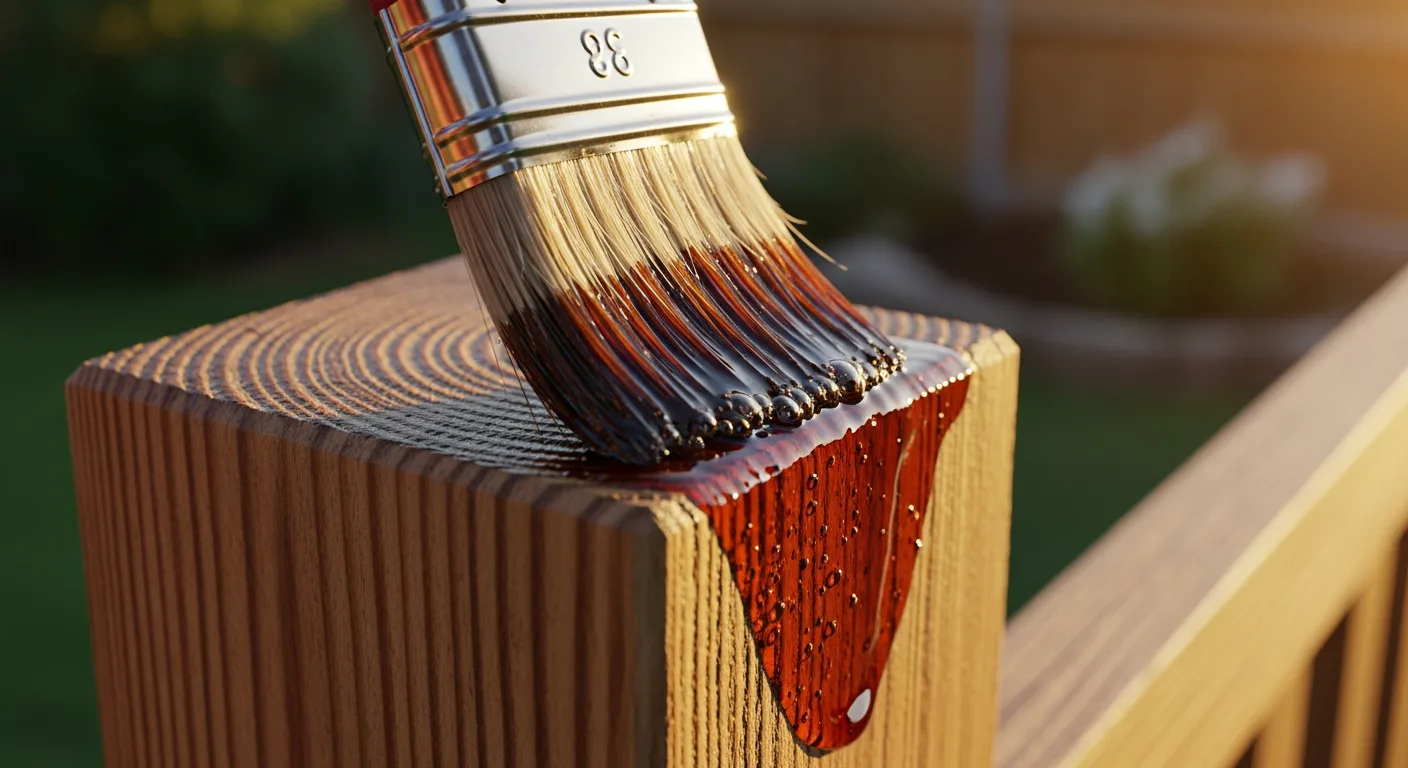
Remember this even if you forget everything else. Wood drinks water through the end grain 10 to 15 times faster than through the face. Think of a straw: along the fibers, moisture shoots straight in.
Rot starts at the cut ends of posts, the bottom cuts, the saw lines. So I treat end grain separately and heavily, 2 to 3 coats, until the wood stops drinking. A little extra product here buys you years of service.
When to coat: the weather decides
The wood has to be dry. Aim for moisture below 18%. By eye: the board is light-colored, doesn't feel clammy in your palm, and it's been 2 to 3 sunny days since the last rain.
Keep air and surface temperature between +5 and +25. Too cold and the coating won't cure. Too hot and it skins over before it soaks in. Here in Moldova the sweet spots are late April, May, and September. Don't work a baking board at noon in July. Wait for morning or evening.
And shade the work from direct sun while it dries. In full sun the top sets while raw product sits underneath, then you get blisters.
How often to refresh
In the Moldovan climate, exterior wood protection gets refreshed every 3 to 5 years. The south-facing side fades first and often needs a touch-up before the rest.
Good news: refreshing a stain isn't a full redo. Wash it, let it dry, scuff the rough spots lightly, lay on a fresh coat. Half a day instead of a whole weekend. Let it go until it's peeling and cracked, though, and you're back to square one: sanding, primer, two coats. That's what the "I'll save money" crowd ends up paying for.
By the way, your facade plays by similar rules. Doing the walls too? Have a look at the facade paint guide.
FAQ
Can I coat wood directly, without a preservative?
Yes, if the wood is new, dry and clean, and your stain already has a preservative in it. Old wood or blue-stained wood needs a separate preservative primer first.
Stain or paint for a fence, which lasts longer?
Opaque paint builds a thicker film and lasts longer, but it hides the grain. Stain lasts a bit less yet refreshes easily and keeps the wood look. Pick by what matters more, the look or the upkeep.
What do I do with already-grey wood?
Don't coat over it. Strip the grey by sanding or with a brightener, dust it off, prime, then finish. Otherwise the new coat leaves with the old loose one.
How many coats on end grain?
2 to 3, until the wood stops drinking it in - estimate how much wood protection you need with the calculator. End grain pulls water several times faster and it's the entry point for rot.
Drop by any of our three Chisinau showrooms with a photo of your fence and we'll match a product to your wood and your situation. Or ask us in chat, you'll get a straight answer, no upsell.