Bathroom and kitchen paint: what survives steam and scrubbing

Have you watched the paint above your bathroom sink go blotchy after about a year? Or peel off in strips near the shower? That's not a bad can. That's ordinary interior paint stuck doing a job it can't handle.
Steam, condensation, splashes, a film of cooking grease, and the daily wipe with a cloth. For a wall, that's real strain. Around Moldova I see the same scene over and over: someone rolls a lovely matte living-room paint onto the bathroom walls, then calls me back to repaint a season later. Let's sort out what bathroom paint in Moldova actually holds up, and where paint loses flat-out to tile. No sales pitch.
Why ordinary paint lasts a year, not ten
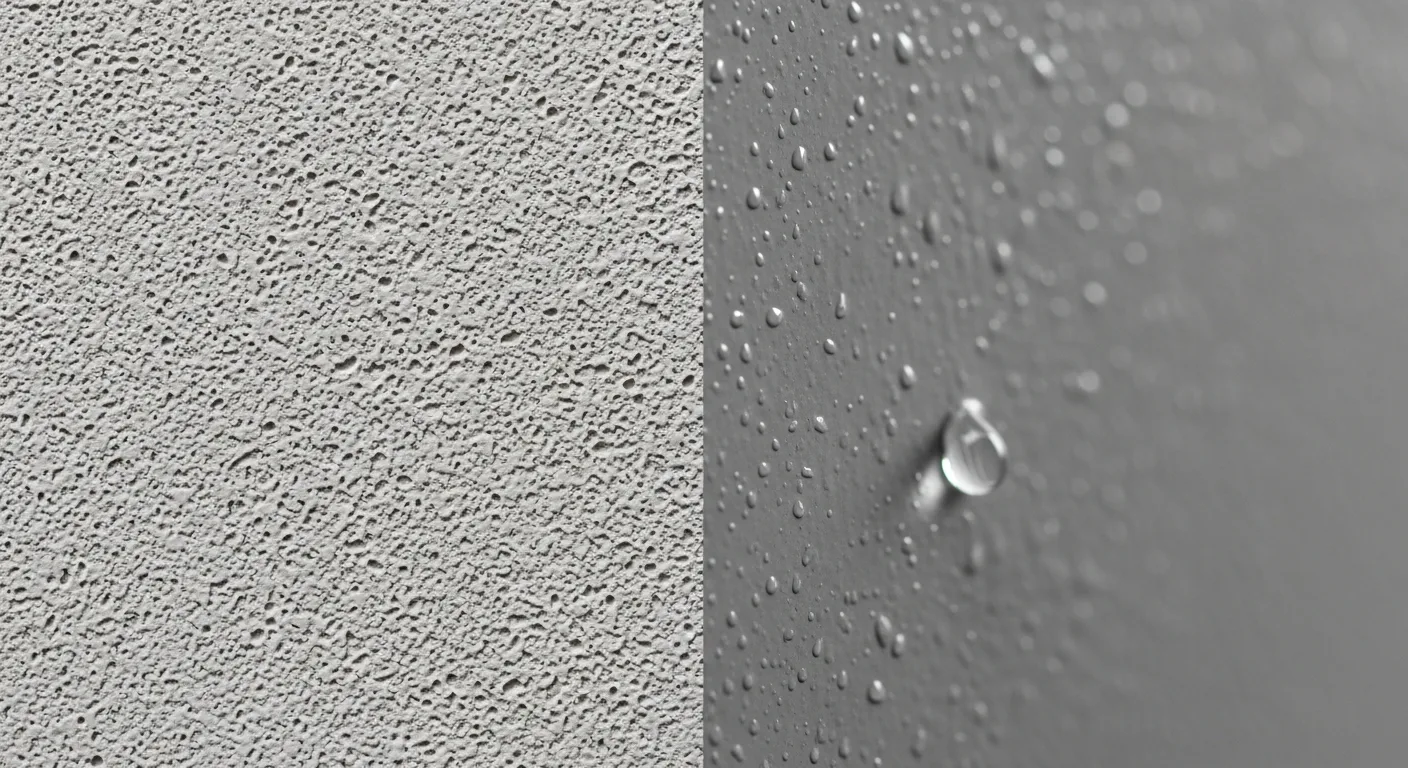
Matte interior paint made for dry rooms is porous. Under a microscope the surface looks like a sponge. In a bedroom that's a win, the wall breathes and hides small flaws. In a bathroom that same trait turns against you.
Steam works into the pores. Moisture can't escape fast enough, the film swells and loses its grip. Add mould spores, which treat a warm damp wall like home, then the cloth and cleaner that scrub the softened layer off. A year, and hello, streaks.
Moisture resistant paint is built differently. The film is denser, the pores nearly closed, water beads off instead of soaking in. Scrub it hundreds of times and it takes it.
EN 13300 wash classes, plain version
There's a European standard for wet-scrub resistance called EN 13300. In plain terms: how many times you can scrub the paint with a wet brush before it wears off. The maker prints the class on the can. Look there.
Five classes. Lower number, tougher paint.
| EN 13300 class | Scrub resistance | Where it fits |
|---|---|---|
| Class 1 | Best, around 200 cycles | Kitchen, bathroom, hallway, kids' room |
| Class 2 | Good | Kitchen, corridors, busy areas |
| Class 3 | Medium | Bedroom, living room |
| Class 4-5 | Low / wipe only | Ceilings, dry rooms |
For a kitchen and bathroom, get class 1 or 2. No lower. Class 1 handles roughly 200 wet-wash cycles, which is years of daily wiping. Class 3 is great in a bedroom, but in a wet room it gives up in a couple of seasons.
If the can never mentions EN 13300 at all, that's already a red flag. Any serious washable-paint maker prints it.
Latex, acrylic and steam protection: what to pick
This is where people get tangled. Let me lay it out.
Water-based acrylic is the workhorse for wet zones. No harsh smell, dries quick, you wait an hour or two between coats. The dense film holds steam and washes easily. For most kitchens and bathrooms in a normal flat, that's the answer.
Latex paint is basically the same water-based acrylic, but with latex additives for stretch and wear. The film is more elastic, rides over fine cracks better and takes frequent washing. If your bathroom wall works hard, latex is your friend.
What matters most in a wet room is the anti-mold additive. Good paint for damp rooms carries a biocide that stops mould growing on the film. Not marketing, real protection. Ask for anti-mold paint kitchen and bath lines directly, because not every interior range has it.
Quick word on finish. Matte hides a crooked wall but washes the worst. Satin sits in the middle, soft sheen and decent washability. Gloss washes perfectly but shows every bump, so the wall under it has to be flawless. I went deeper on this in how to choose interior paint.
The backsplash by the stove and the bathroom ceiling
Two spots where trouble usually starts.
The backsplash. Airborne grease settles as a thin film, dust sticks to it, and a month later there's a grey matte smear above the hob. You want the most washable surface here, class 1, satin or gloss, so grease wipes off with degreaser and leaves nothing. Honest take, though: right above the burners, where oil spatters and the heat is high, a glass or tile panel still wins. Paint survives there, but you'll be cleaning it often.
The bathroom ceiling. The wettest spot in the room, since all the steam rises and settles right there. An ordinary class 5 ceiling paint blooms with mould first. Use a moisture resistant ceiling paint with a biocide, don't cheap out on that one square meter. Repainting a ceiling is the worst painting job there is, trust me.
Prep: primer is mandatory, full stop
This is where nine out of ten go wrong. A quick coat over old, dirty wall means you've thrown the money away.
First strip the old flaking layer and any trace of mould. If there was mould, treat it with an antiseptic and let it dry, or it grows straight through the new paint. Fill cracks and dents with a moisture-resistant filler, and for a bathroom use cement-based, not polymer. Polymer filler in a damp room lets you down over time.
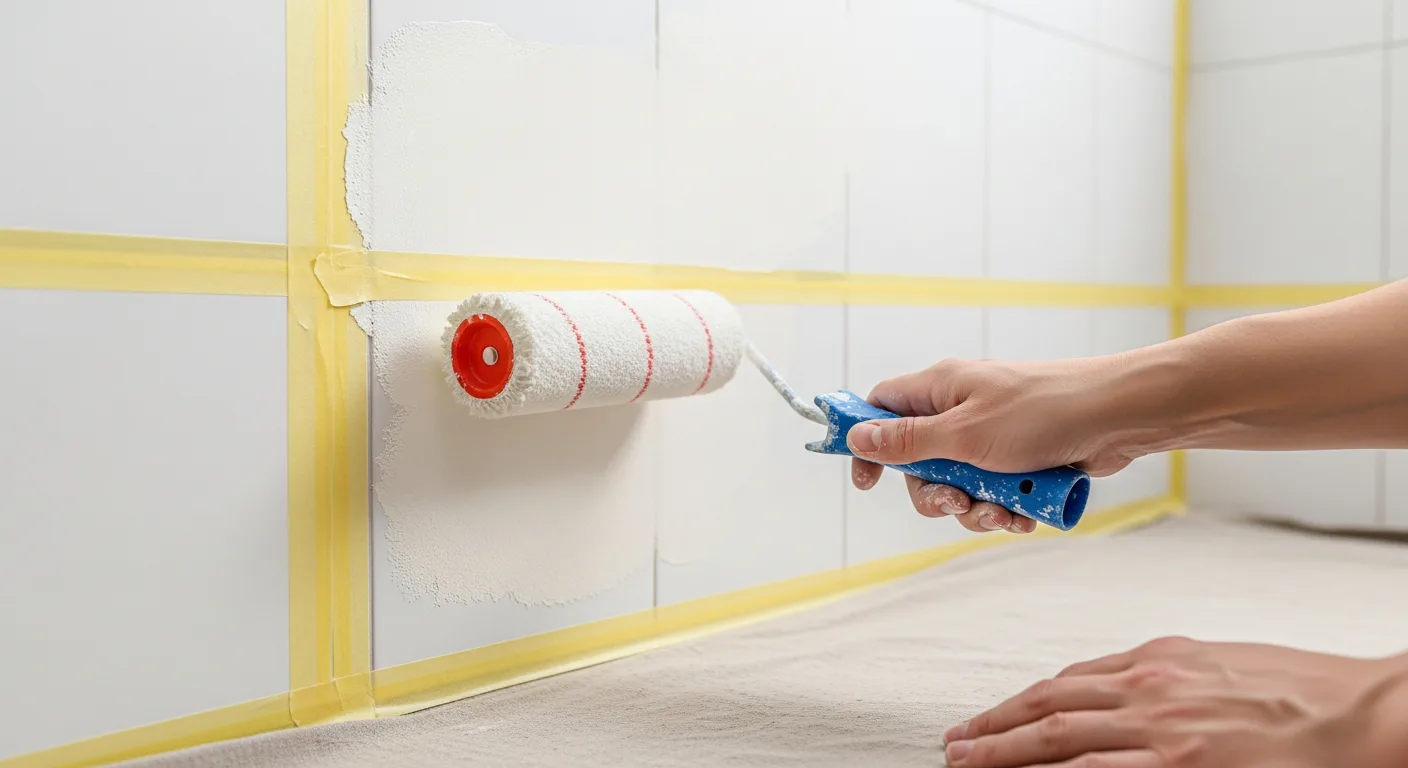
Primer in a wet zone isn't optional. A deep-penetrating primer firms up the surface, seals the pores, and cuts paint consumption, otherwise the porous wall drinks the first coat and dries patchy. Why you need primer and which one, I covered here. In the catalogue check the primers section.
And air humidity. Paint below roughly 70 percent humidity and above plus 10 degrees. In a cold damp bathroom the paint dries for weeks and clouds over. Run the fan, warm the room, let the wall dry after prep.
How long until the first shower
The number one question on any job: when can I shower?
Water-based acrylic dries to the touch in a couple of hours, an hour or two between coats. But full film cure, when the paint reaches its final hardness and wash resistance, takes up to 28 days. That doesn't mean no showering for three weeks. It means don't pour water onto the fresh wall in the first days, and don't scrub it. My rule from the field: after the last coat, give the wall a quiet day, then a gentle shower is fine. Hold off on heavy scrubbing for a week or two.
Consumption is easy to estimate. Acrylic covers 7 to 9 square meters per liter in one coat, and a bathroom always needs at least two. Don't feel like doing the math, drop your area into the coverage calculator and it works out paint, primer and filler at once.
Where paint honestly isn't the best call
I'll say it straight, even though we sell paint. The shower enclosure, where water runs down the wall daily, is tile territory. No washable paint, not even class 1 with a biocide, survives constant contact with running water at the seams. That needs ceramic and proper waterproofing.
Paint works great on bathroom walls outside the shower zone, on the ceiling, and across the kitchen except the wet splash by the sink. That's its honest patch. Want it to last without repaints, respect the line between paint and tile.
FAQ
Which paint should I choose for a bathroom?
A moisture-resistant acrylic or latex, wash class 1 or 2 under EN 13300, with an anti-mold additive. Go satin, it washes better than matte and forgives small flaws.
Can I paint a bathroom with ordinary interior paint?
You can, but it won't last. Dry-room paint is porous, swells in steam, and goes blotchy within a year. For a wet room get paint labeled moisture resistant with an EN 13300 class.
How long after painting can I shower?
Give the wall a day after the final coat, then a light shower is fine. Acrylic reaches full wash strength in up to 28 days, so skip heavy scrubbing for the first week or two.
Do I need anti-mold paint in the kitchen?
Mould is rarer in a kitchen than a bathroom, but the zone by the sink and over the stove stays damp. A class 1-2 paint with a biocide doesn't hurt, especially if the kitchen ventilates poorly.
Not sure what suits your bathroom or kitchen, drop into any of our showrooms in Chisinau or ask on chat. Browse the paints section and work out your coverage ahead of time.