How to choose interior paint: a room-by-room guide for Moldova

Ever picked a color from a chart, brought the can home, rolled it onto the wall, and watched it dry into something you didn't order? Behind the counter I see this every week. And it's almost never the color's fault. It's that the paint got picked for the wrong room.
I've spent twelve years helping people choose paint, and a lot of them are expats setting up a flat in Chisinau, staring at labels half in Romanian and half in Russian. So let's cut through it. By the end you'll know what to grab for each room, and why.
There's no single "wall paint"
The first mistake is thinking one can does every room. A living room wall and a kitchen wall live completely different lives. One you dust once a year. The other catches grease and gets scrubbed every week.
So look at two things from the start: the paint type and the finish. Type tells you what's in the can (water or solvent). Finish tells you how the wall looks and how well it washes.
For living spaces you'll almost always want a water-based acrylic paint. No harsh smell, one to two hours between coats, easy to roll and brush. Coverage usually runs 7 to 9 square meters per liter, up to 13 with some brands. That's your baseline.
Water-based or alkyd: which goes where
Short answer for apartment walls: water-based acrylic. Almost always.
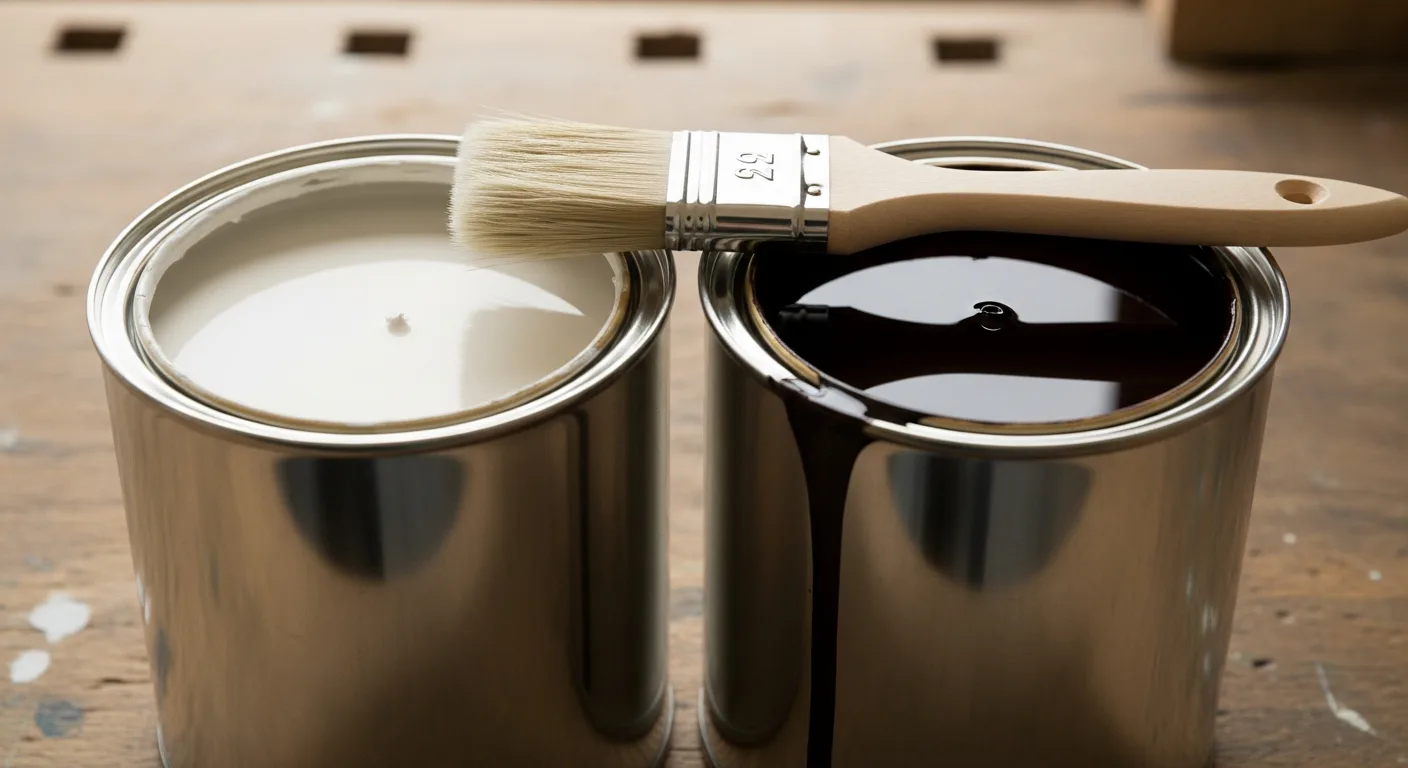
Water-based paint dries fast, doesn't reek, won't yellow. You rinse the brushes under the tap. Alkyd paint gives a harder film, but it carries a strong solvent smell, dries slower, and yellows over time, especially on whites. On the walls of a room you actually live in, that's a headache you don't need.
Where does alkyd still earn its place? Radiators, doors, sometimes window sills, anywhere hardness beats odor. But that's enamel territory, a different story from wall paint.
Finish decides half the result
This is where beginners trip most. Finish is the level of sheen. It shapes how the wall looks, sure. It also decides whether the wall forgives your mistakes.
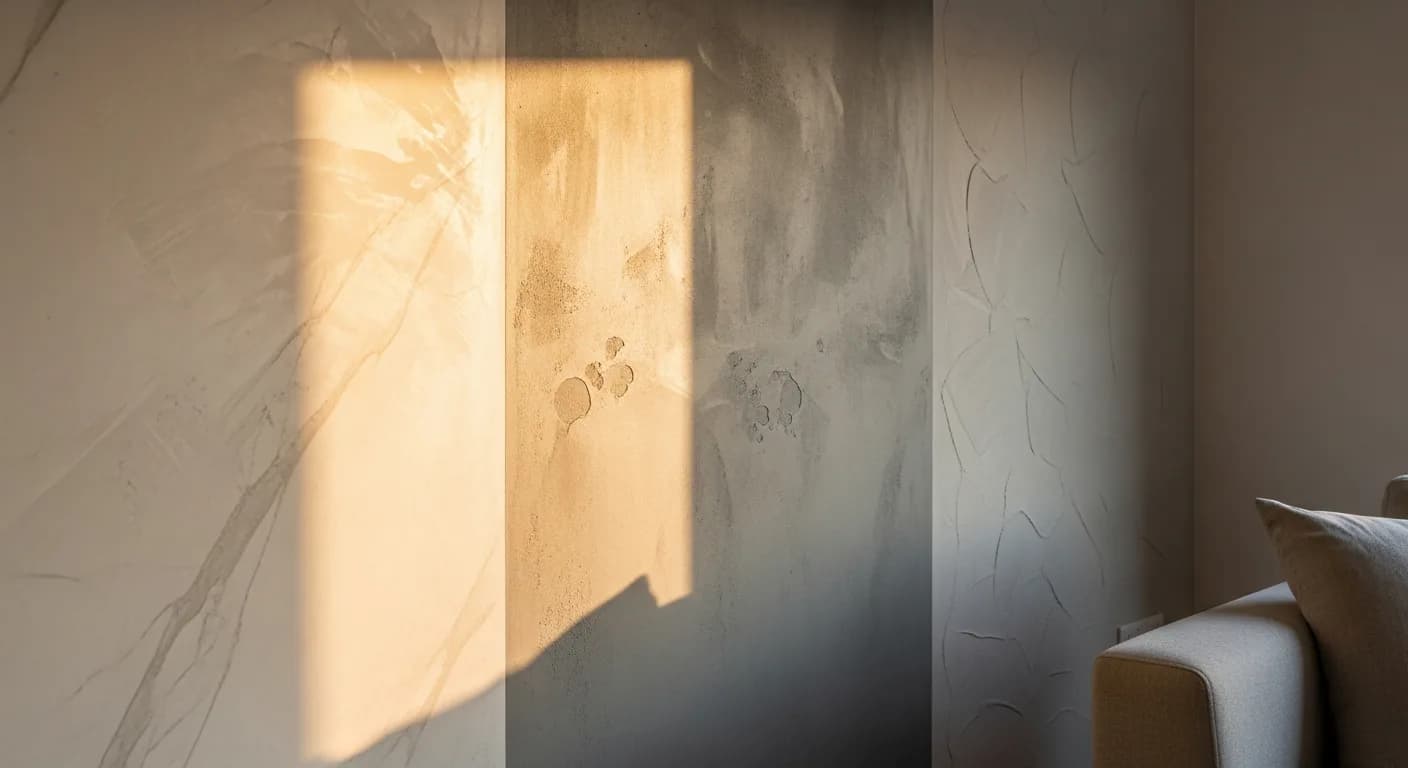
- Matte soaks up light and hides flaws. Slightly uneven plaster, small bumps, ghosts of an old repair, matte covers all of it. The catch: matte walls are harder to clean, dirt sinks in.
- Satin (semi-matte) is the middle ground. A soft silky sheen, washes noticeably better than matte, still forgives small imperfections within reason. My personal pick for most rooms.
- Gloss shines, reflects, and shows every dent and wave without mercy. In return it cleans perfectly. For gloss the wall has to be dead flat, or side light from a window will expose everything.
Simple rule. Perfect wall, take anything you like. Wall with a history, go matte or satin and let it cover for you.
EN 13300 washability classes in plain English
On European cans you'll see a class rating under EN 13300. That's the standard for wet-scrub resistance, basically how many times you can rub the wall with a damp cloth before the paint starts coming off.
There are five classes. And the logic runs backwards from what you'd guess: lower number, better durability.
- Class 1 is the toughest, around 200 wash cycles. For spots where the wall gets wiped constantly.
- Class 2 to 3 is a solid mid-range for living rooms. Wipe a smudge off without worry.
- Class 5 is basically ceilings only. Don't scrub it, the paint rubs away.
When a label or a salesperson says "washable paint," ask about the class. "Washable" with no number is just a word.
Table: room to paint type and finish
| Room | Paint type | Finish | Why |
|---|---|---|---|
| Living room, hallway | Water acrylic | Matte or satin | Few splashes, even look matters. Satin in the hallway, walls get brushed there |
| Bedroom | Water acrylic | Matte | Calm matte look, rarely washed |
| Kids room | Acrylic, class 1-2 | Satin | Markers, handprints. Needs to take scrubbing |
| Kitchen | Acrylic, class 1-2 | Satin or gloss | Grease and splatter, washed often |
| Bathroom | Moisture-resistant acrylic, class 1 | Satin | Humidity, condensation, needs water resistance |
| Ceiling | Water acrylic | Matte | Deep matte hides flaws, no washing needed |
Kitchens and bathrooms get their own write-up, there's enough nuance there for a whole conversation: paint for bathroom and kitchen. Short version, don't skimp on the washability class in those rooms.
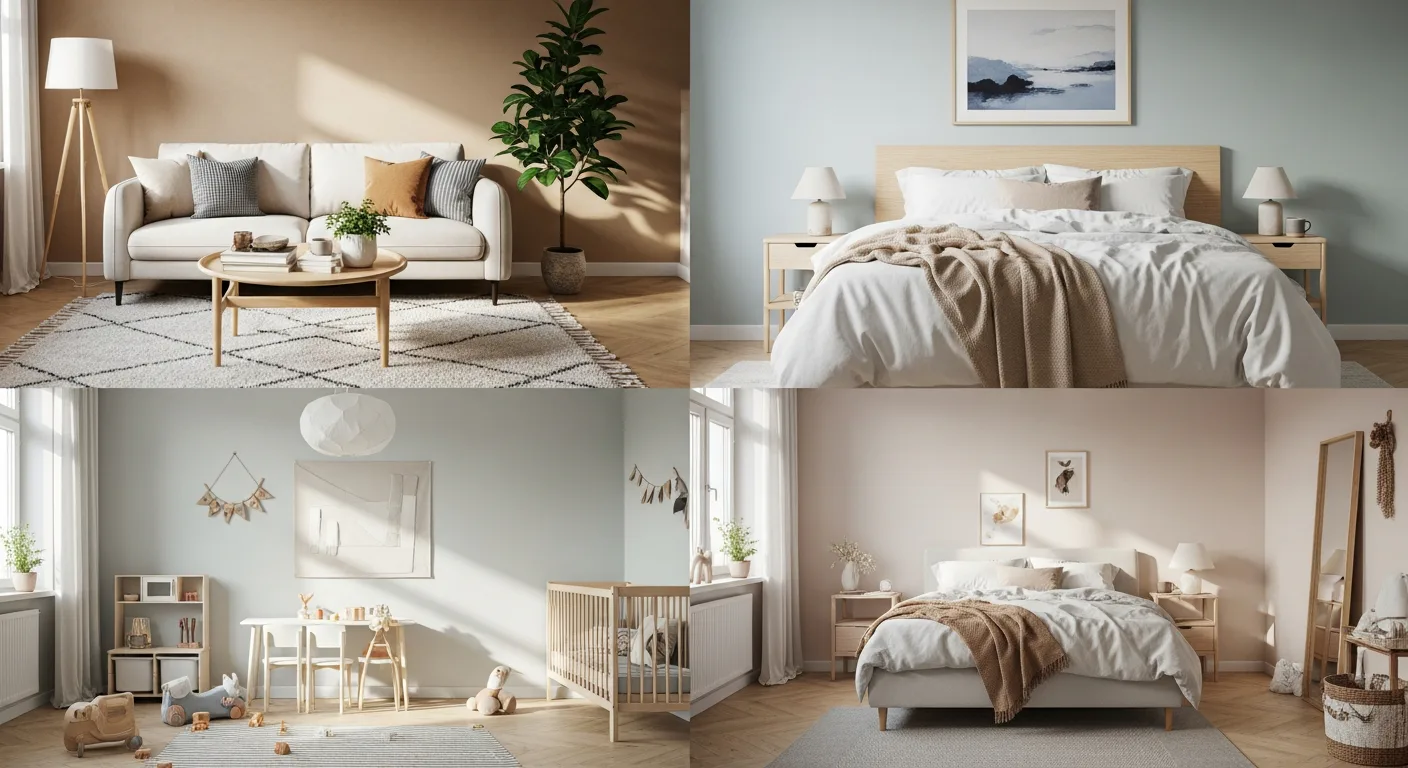
White base or tinted color
If you want clean white, buy white paint straight off. A white matte paint covers big surfaces well and there's no reason to pay extra for tinting.
Want a color? Then it's base plus tint. You take a base (there are different ones for dark and light shades) and tint it to your shade by machine recipe. The win with machine tinting is repeatability. Run short on paint, and you reorder the exact same batch, shade for shade. Mix two cans by hand and good luck hitting that color again.
And keep one thing in mind that nobody warns you about. Dark, saturated colors often need a third coat. Deep blue, wine red, charcoal, they cover worse than white, and two coats leave patches. That's extra paint and extra time. Budget for it up front so you're not running to the shop mid-project.
Common mistakes when choosing
The misses I see most often on jobs around Chisinau:
Cheaping out on the washability class in high-traffic spots. Hallways and kitchens get rubbed all the time, and budget paint there burnishes to a shine within six months.
Gloss on an uneven wall. Side light from the window drags out every ripple. Gloss wants a flat surface, otherwise you've wasted the money.
Skipping primer. Plenty of people paint straight over old filler or bare wall, then wonder about the heavy coverage and the blotches. A deep-penetrating primer firms up a crumbly surface and cuts paint consumption. I broke it down separately, whether you need primer, spoiler, almost always yes.
Buying by eyeball. Folks grab one can and hope. Work it out ahead with the coverage calculator or estimate by area yourself, or you'll either run short or end up with leftovers.
Experienced painters cut corners freehand with a brush, no tape, on a steady hand. For a beginner, tape is non-negotiable, or the cut line will wander.
FAQ
What paint should I choose for a kitchen?
Water-based acrylic, washability class 1 to 2, satin or gloss finish. Kitchens get washed often, so it needs to handle grease and moisture.
What's the difference between matte and satin?
Matte hides wall flaws but washes harder. Satin has a slight sheen, washes noticeably better, and still forgives small imperfections. For most rooms satin is the comfortable middle.
How much paint do I need for a room?
Depends on area, surface type, and number of coats. On average a liter covers 7 to 9 square meters in one coat. Count dark colors as three coats. The site calculator gives you a closer number.
Can I wash the wall right after painting?
No. Paint sets in a couple of hours, but acrylic keeps building strength for up to 28 days. Wipe gently for the first month, no pressure.
Not sure what fits your room? Drop by any of our Chisinau showrooms or ask us in the chat, we'll match the paint to your job and work out the coverage.