How to Paint Walls Without Streaks: 7 Beginner Mistakes

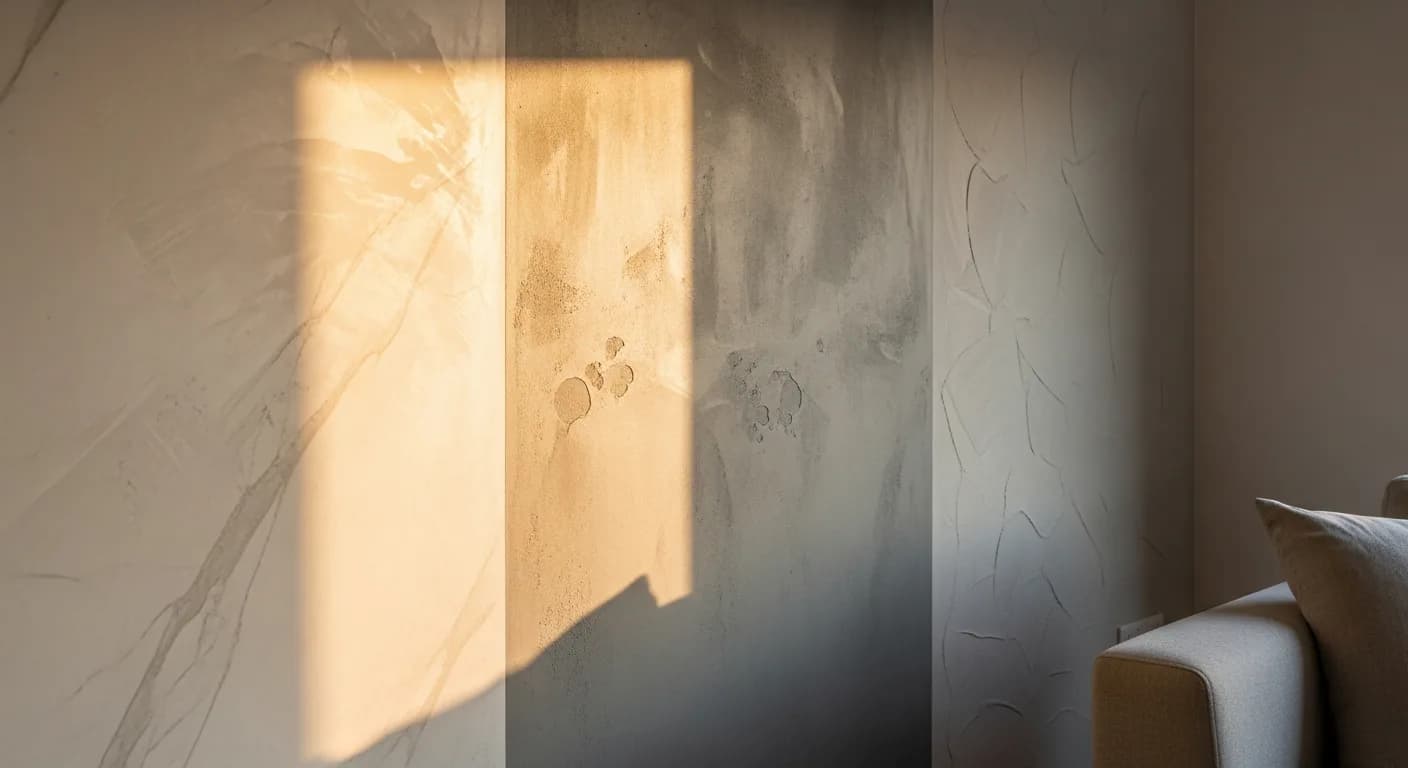
Ever notice how a freshly painted wall suddenly shows streaks when light hits it from the side? In the daytime it looks even. Then the sun shifts and there they are. I have painted walls around Chisinau for fifteen years, and I will tell you straight: the paint is almost never the problem. Your technique is.
Roller marks aren't a sign you bought a bad can. They are a handful of small mistakes, all easy to avoid once you know them. Let's take seven in order. The format is simple: the mistake, why it happens, what to do instead.
Mistake 1: you grabbed the wrong roller
The most common one. Someone walks in for a roller and grabs whatever is cheapest, usually foam. Then they wonder where the bubbles and bald patches came from.
Why it happens: foam does not suit water-based paint. It pushes air in and leaves tiny bubbles that pop into texture. Pile that is too long loads too much paint and drips. Too short never lays down enough, so you get dry patches.
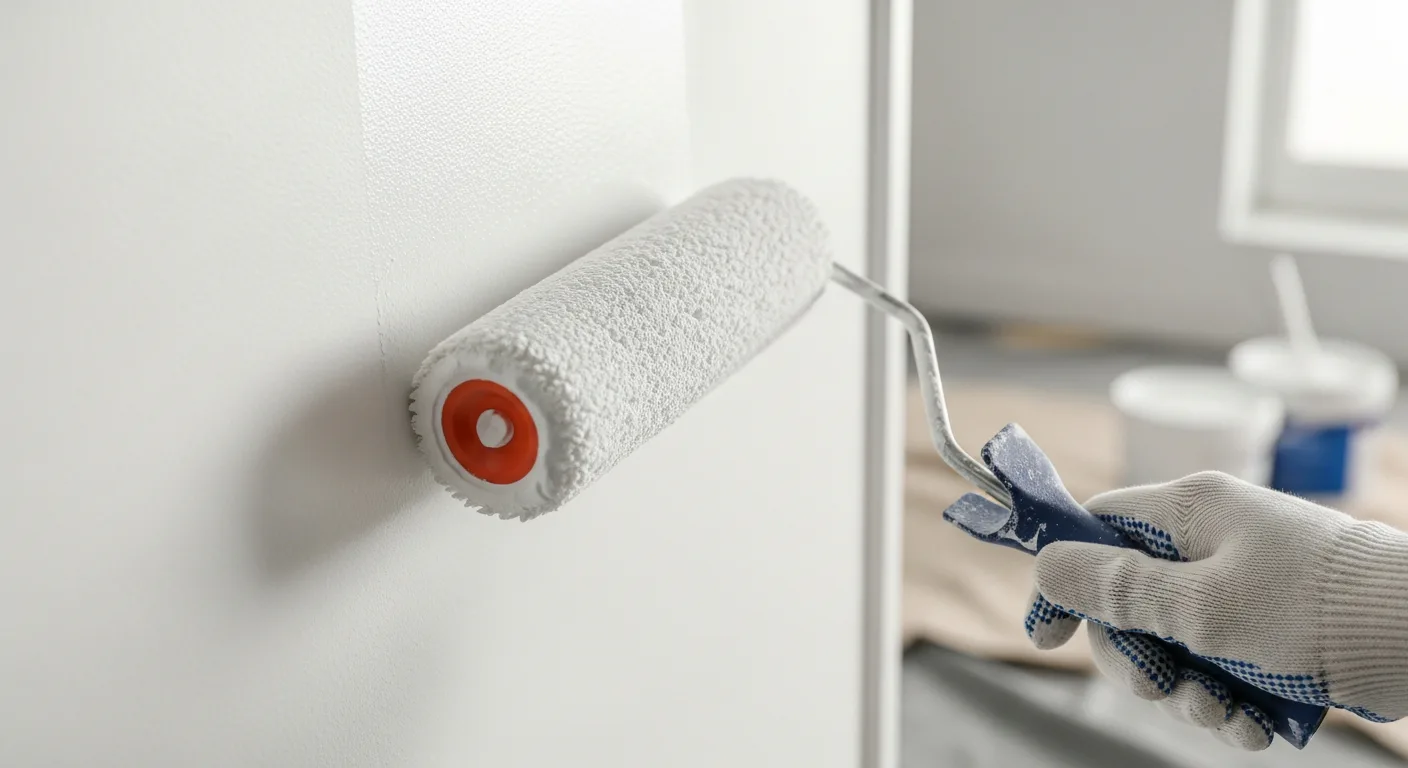
What to do: for water-based acrylic, pick a roller with medium pile. Shorter pile for a smooth wall, longer for a textured surface. For width, use 250-300 mm on the main wall area and 100-180 mm for corners. Our rollers and brushes are sorted by paint type, so you won't guess wrong.
Mistake 2: you roll at random
A beginner runs the roller wherever it lands: up, down, up again over the same spot. You end up with a patchwork quilt, thick here, bare there.
Why it happens: the paint goes on in an uneven layer. Where the passes meet, it dries differently, and in raking light that reads as streaks.
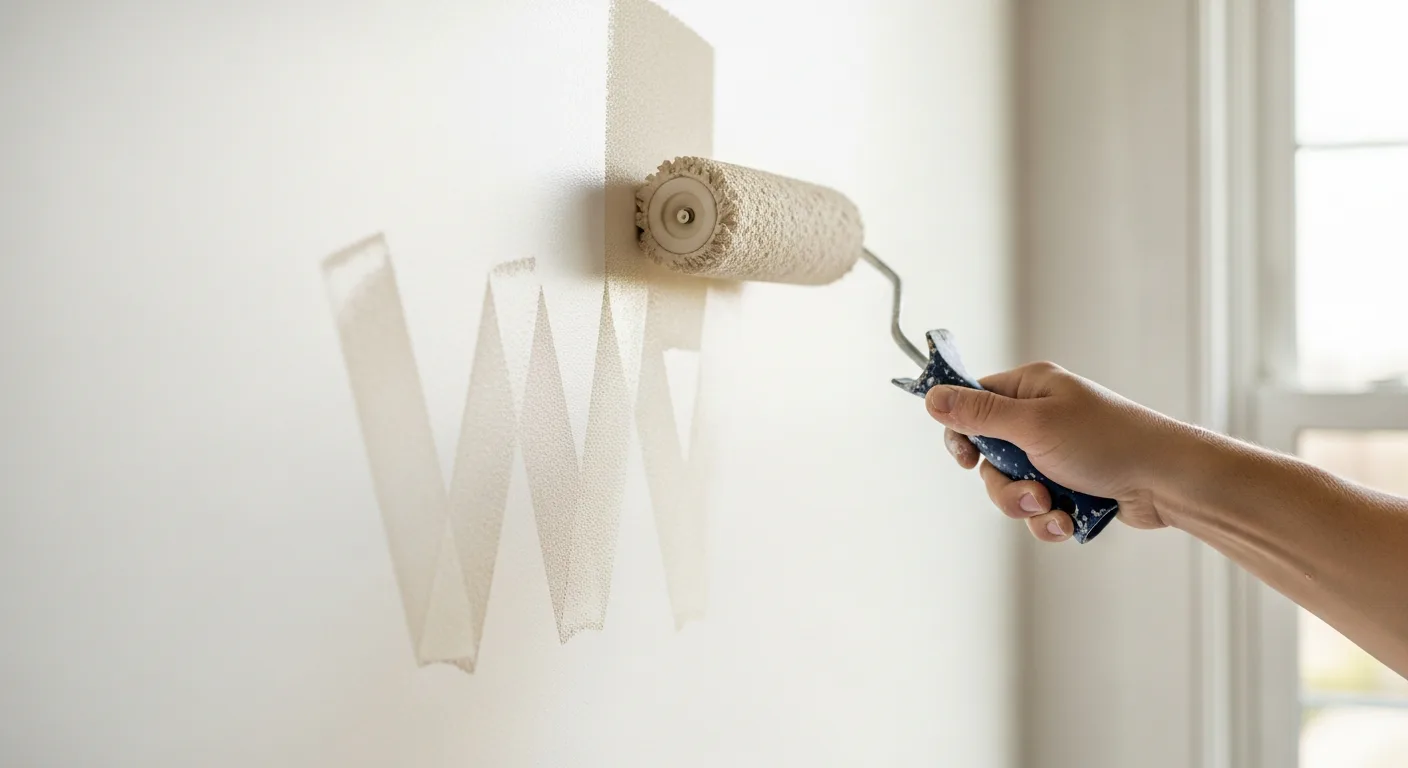
What to do: work in a W or M pattern. First throw paint onto the wall in a zigzag, drawing a W about half a meter tall. Then, without lifting the roller, spread that zigzag with vertical passes in both directions to fill the gaps. One square like this is roughly a meter by a meter. Done with it, move to the next, overlapping the previous one while it is still wet. The wet edge gets its own section below, because it matters most.
Mistake 3: you lose the wet edge
Here it is, the number one cause of streaks. If you remember one thing from this whole piece, make it this.
Why it happens: you paint one section, glance at your phone, come back ten minutes later. The edge of the first section has already set. You lay fresh paint over the dried strip, and the overlap becomes a double layer you can see forever. That is the streak.
What to do: paint the whole wall in one go, corner to corner, no pauses in the middle of the surface. Each new pass overlaps the previous one while it is still wet and glossy. Keeping that wet edge alive is skill number one. Finish the wall, then take your break. Not before.
Mistake 4: you don't wring out the roller
You dunked the roller in the tray up to the handle and carried it to the wall, dripping. Sound familiar?
Why it happens: an overloaded roller lays down too thick a coat. Paint runs in drips, and the middle holds too much, so it dries unevenly. More streaks.
What to do: get a paint tray with a ribbed slope. Dip the roller halfway, then roll it across the ribs three or four times. It should be loaded evenly all the way around without dripping. Now go to the wall.
Mistake 5: you go too fast
You want the room done in an hour. The roller flies across the wall like a propeller and paint sprays everywhere.
Why it happens: at speed the roller flings paint and traps air. The coat goes on loose, full of micro-bubbles. You also can't keep track of the wet edge, blowing past a section before you know whether it laid down evenly.
What to do: a calm, steady pace. Make the last pass on each section top to bottom, one direction, no pressure. That smooths the coat and erases the marks. A streak-free finish is about being unhurried, not quick. You save the time you'd have spent repainting.
Mistake 6: you created a draft
It's hot, so you throw the windows and door wide open to air the place out. Meanwhile the paint dries in patches.
Why it happens: a draft dries the surface unevenly. Near the window the coat sets in minutes, deeper in the room it takes longer. Where those zones meet, you get a visible border. A draft also blows dust onto fresh paint.
What to do: close the windows and door a couple of hours before you paint, and keep them shut until the wall sets. Water-based acrylic dries between coats in an hour or two, so wait that long with no draft. It barely smells, so you can breathe fine. Air the room out afterward.
Mistake 7: you coat over a half-dry first layer
Impatience ruins a good paint job. The first coat is still tacky and you are already rolling the second.
Why it happens: the roller catches the wet paint underneath, drags it, and tears it off in spots down to the primer. You get bald patches and ridges. No even finish.
What to do: let the first coat dry, that hour or two for acrylic. The can always lists the exact interval, so check it. Only then the second coat. And remember: full cure, the point where you can actually wash the wall, takes acrylic up to 28 days. A dry coat does not mean wash it tomorrow. Dark, saturated colors often need a third coat, so plan for it from the start and work out how much paint you need.
Bonus: cut the corners with a brush
A roller can't reach flush into a corner, a baseboard, or the ceiling line. Try, and you will smear paint onto the next surface.
The cut line where wall meets ceiling, the corners, the edge by the trim, you do those with a brush first, a strip about five centimeters wide. This is called cutting in. Experienced painters cut freehand, dead straight. For beginners: tape the edge with masking tape, it holds the line. And remember, a cheap brush with bad bristles drops hairs right into your fresh paint, and then you fish them out with a needle. Get a proper brush from the start.
One more thing: the paint you choose affects the result too. Matte forgives small slips and roller marks, gloss shows every streak. If your hand isn't steady yet, start with a matte finish. More on that in our guide to how to choose interior paint.
FAQ
Why are there roller marks on my wall after painting?
The main cause is losing the wet edge: you laid fresh paint over a strip that had already set. Other culprits: an overloaded roller you didn't wring out, too fast a pace, a draft during drying. The paint itself is rarely to blame.
Which roller should I use for water-based wall paint?
A medium-pile roller, 250-300 mm wide for the main area and 100-180 mm for corners. Skip foam, it bubbles. Save velour for smooth enamels.
How long should I wait between coats?
With water-based acrylic, usually an hour or two. The exact interval is on the can. Don't roll a second coat over a tacky first one or you will tear the paint. Full cure before washing takes up to 28 days.
Does a beginner need masking tape?
Yes. Experienced painters cut corners freehand, but if it's your first time, tape along the ceiling, baseboard, and trim saves your cut line. Pull it off before the paint fully cures.
Stop by one of our Chisinau showrooms or ask us in the chat, and we'll match a roller and brush to your paint and surface in a couple of minutes. You can also estimate coverage right in the calculator.