Base coat vs finish putty: what to use and when

Ever grabbed one bucket of putty for a whole wall and called it a day? That single choice has eaten more weekends than I can count. People walk into the showroom asking for the "regular" filler. There is no regular. There's base coat, there's finish putty, and they do completely different jobs.
Fifteen years on job sites around Chișinău, and I still see this every week. So let's sort it out: how they differ, and when one of them is enough on its own.
Start with grain and layer
The main difference comes down to particle size and how thick a layer you can lay.
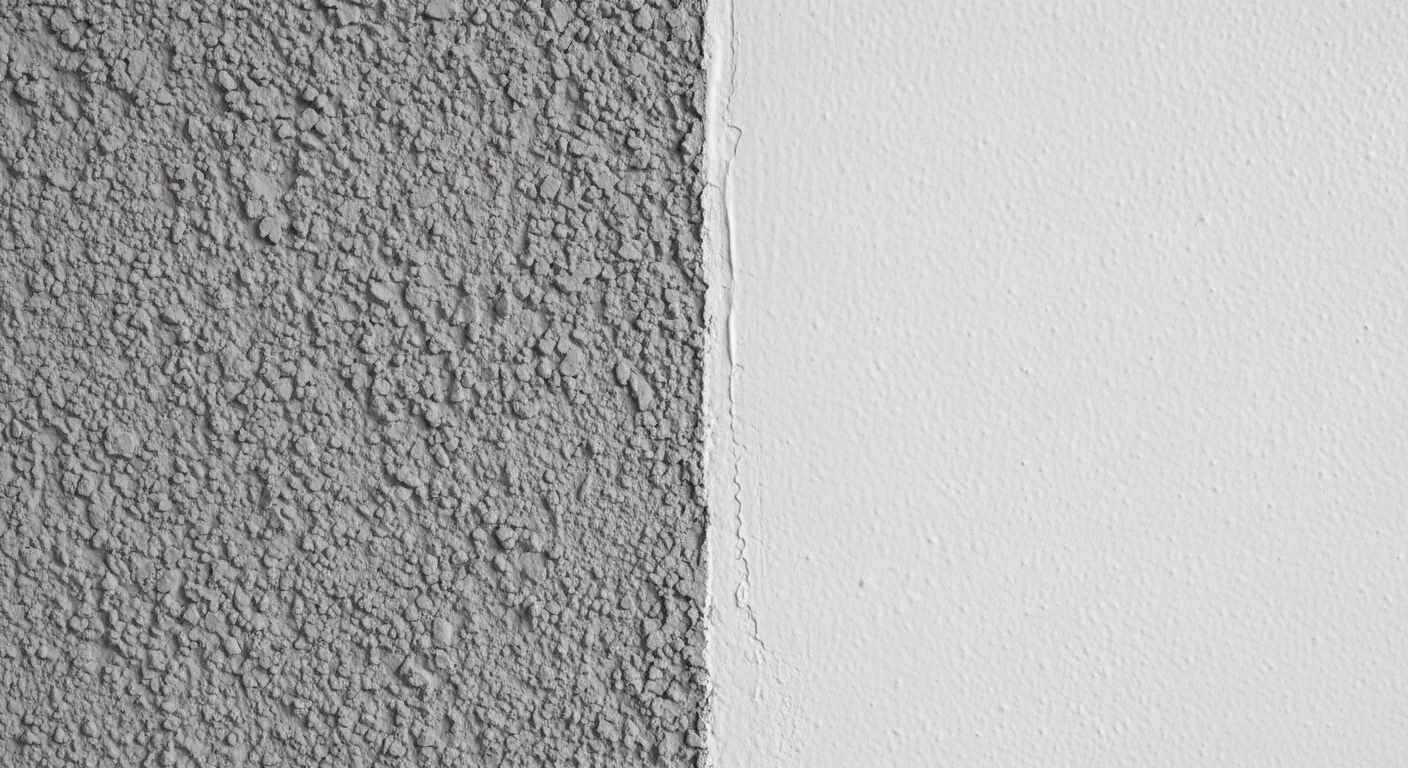
Base coat is coarse. It fills deep gouges, the channels left after rewiring, gaps between slabs. You can put down 5 to 30 mm in a pass, sometimes over a few rounds. The surface comes out rough afterward, and that's fine. Its job is to fix the wall's shape, not to look pretty.
Finish putty is fine grained. Thin layer, up to 3 mm, smooth. That's what goes under paint, because only the fine fraction gives you the flat plane where no scratch shows up under raking light.
Here's the site rule. Base coat fixes the wall's form. Finish putty preps it. Skip the base and smear finish straight onto a crooked wall, and you're literally throwing money at the wall.
When finish putty alone is enough
More often than you'd think. If the wall is already flat, say after good machine plaster or on drywall, you don't need a base layer at all. Fill the joints and screw heads, then go straight to one or two thin coats of finish.
Check it yourself. Grab a two meter straightedge and hold it against the wall in a few spots. Gaps under 2 mm? Finish putty will do. See finger-wide cracks? You need base coat first.
Gypsum, cement, polymer: which goes where
This is where folks mix it up and grab the wrong one. The base material matters more than it looks, especially if water ever reaches the room.
Gypsum putty is for dry rooms. Bedroom, living room, hallway. Dries fast, sands easily, comes out white. Put it in a bathroom or an unheated country house and it'll soak up moisture and start crumbling.
Cement is the opposite, made for wet zones. Bathroom, kitchen near the sink, the base of an exterior wall. Water doesn't bother it. Sanding is harder and the grain is tougher, but in a wet room you don't really have a choice.
Polymer putty is the top-tier finish for dry rooms. It won't crack, spreads thin, gives a mirror-flat plane under paint and under thin light wallpaper. Costs more, and under busy patterned paper there's little point paying the premium.
| Type | Where to use | Layer | Note |
|---|---|---|---|
| Base coat | anywhere, for leveling | 5-30 mm | coarse grain, rough finish |
| Gypsum finish | dry rooms | up to 3 mm | white, sands easily |
| Cement | bathroom, kitchen, wall base | base and finish | shrugs off water |
| Polymer finish | dry rooms, under paint | thin | won't crack, smooth |
Not sure what your room needs? Browse the putty fillers or ask us in chat, we'll point you to the right one.
Don't wreck the sanding
Sanding decides everything. You can apply it perfectly and ruin the result at this one step.
Let the layer dry all the way through. Finish putty usually gets touched after a day, but watch the room's humidity. In a cold or damp space, wait longer. Sanding wet putty is pointless, it balls up and clogs the mesh.
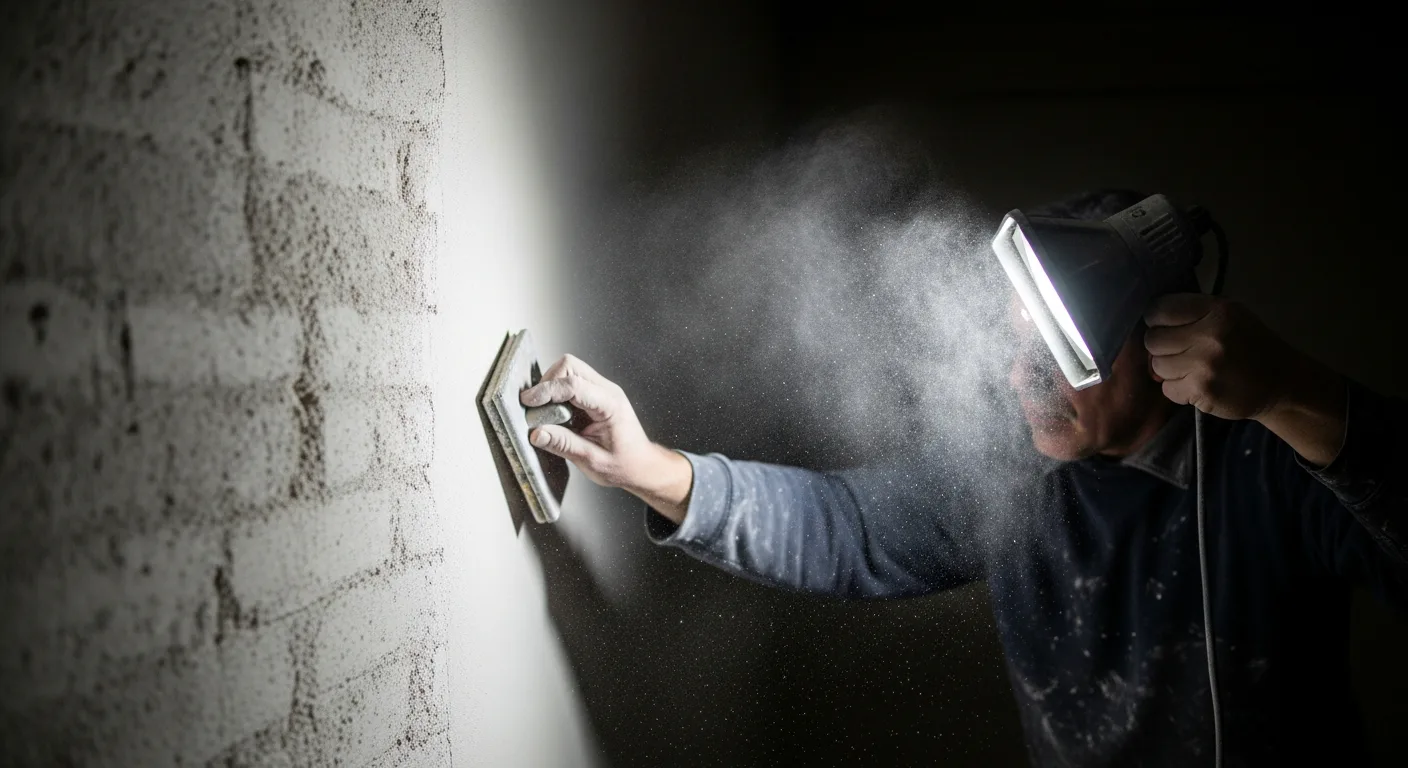
Use a sanding float with mesh, not sandpaper, because mesh doesn't clog with dust as fast. And light from the side, always. Set a lamp at a sharp angle to the wall and every flaw jumps out as a shadow. Without raking light you won't see them, but daylight will once the paint is on. Trust me, redoing it stings worse.
There'll be plenty of dust. A respirator and open windows aren't where you save money at your health's expense.
Under paint vs under wallpaper
This fork in the road decides how much finish putty you'll lay.
Under paint the wall has to be flawless. Paint, especially a light matte one under raking light, shows every ripple. You want two coats of finish here and careful sanding. Polymer is right at home for this.
Under thick wallpaper you can ease off. The pattern and texture hide small flaws, so a single coat of finish does it, sometimes even base coat under heavy vinyl. Thin light wallpaper is another story. It lets light through, so you prep almost like for paint.
And yes, prime before puttying and before painting. Primer binds dust and evens out absorption, and without it the finish coat goes on blotchy. I went into this in the post on whether you need primer. Primers sit in their own category. And if you're already thinking about color, read the guide on how to choose interior paint.
Want to estimate how many bags you'll need without leaving home? The coverage calculator works it out by area and putty type, so you don't make a second trip to the store.
FAQ
Can I apply finish putty directly without a base coat?
Yes, if the wall is already flat: machine plaster, drywall, or gaps under 2 mm against a straightedge. On a crooked wall, base coat first, then finish.
What's the difference between base coat and finish putty?
Grain and layer thickness. Base coat is coarse, goes on 5-30 mm, fixes the geometry. Finish putty is fine, up to 3 mm, preps a smooth surface for paint.
Which putty for a bathroom?
Cement based. It shrugs off water and won't crumble in damp, unlike gypsum, which belongs in dry rooms.
Polymer or gypsum under paint?
Polymer gives a smoother plane and won't crack, so it's better under light paint in raking light. Gypsum is cheaper and fine under wallpaper or a less demanding finish.
Drop by any of our Chișinău showrooms or message us in chat, and we'll match the putty to your wall and tell you how much to buy.