Metal paint in Moldova: gates, fences, radiators and rust

Ever watched paint blister off a gate after a single winter, even though the can wasn't cheap? It's almost never the paint. It's that someone treated metal like a wall and brushed straight over the rust without prep. I'm Igor, fifteen years in finishing work, and on jobs around Chisinau I see this constantly.
Metal plays by its own rules. The surface has no pores, so ordinary paint has nothing to grip, adhesion fails, and the film peels away in sheets. Meanwhile corrosion keeps working underneath, quietly, until the rusty streaks show up. Good news: get the order of steps right and a gate lasts five to seven years before it needs a repaint. Less good news: there's no magic can you slap on and forget.
Prep the surface, this is where it's won
The most expensive paint isn't the one you bought. It's the one you brush on again next season because you skipped the prep. Metal prep is boring and messy, and it decides almost everything.
Here's the order:
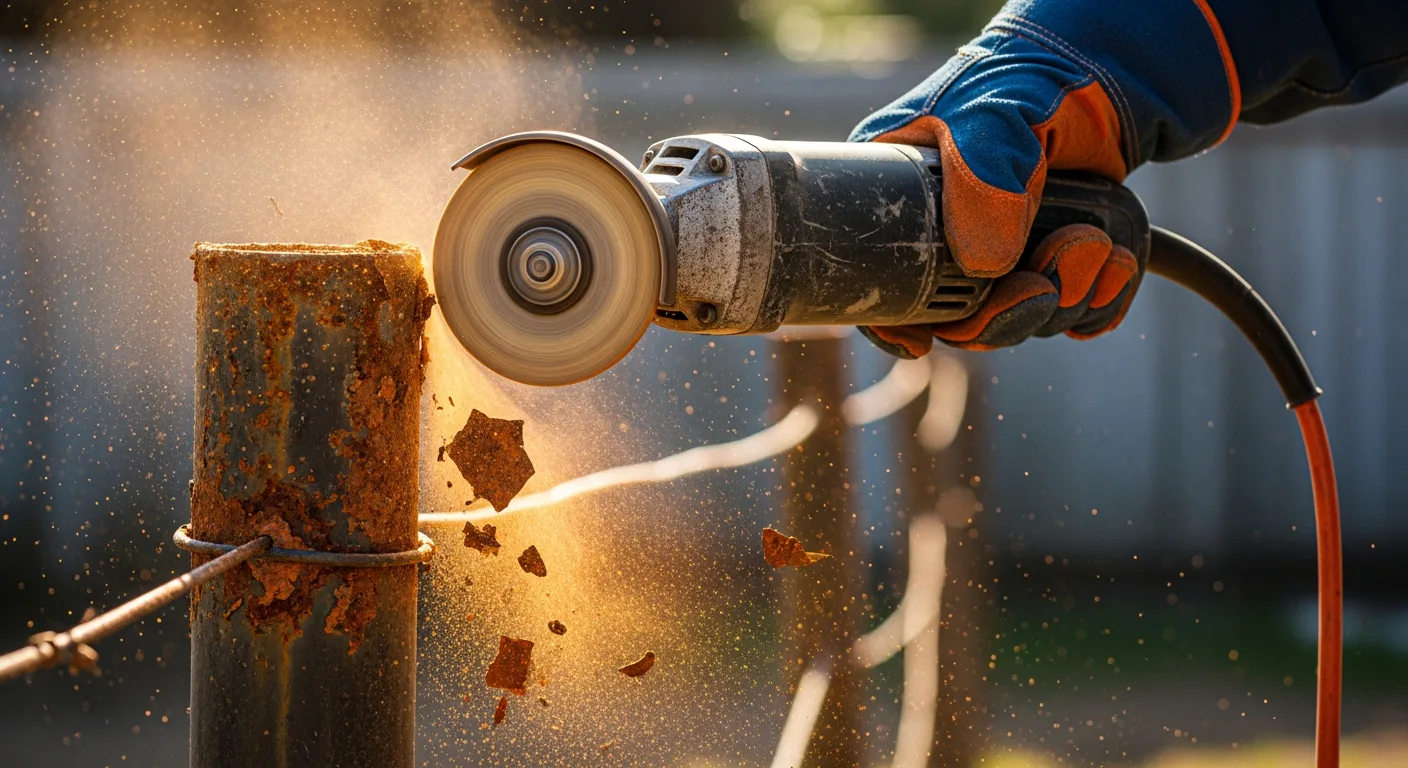
- Knock off loose rust and any old peeling paint. Small spots, a hand wire brush. Crusted rust, a wire wheel on a drill or an angle grinder with a flap disc. Get down to sound metal, because rusty scale left under the film is a slow bomb.
- Sand the old coat to a matte finish. A glossy layer has to be scuffed or the new paint won't bond.
- Degrease it. White spirit, a rag, then wipe dry. Nothing sticks to a greasy surface, not primer, not enamel. People skip this step the most, and they pay for it.
The question you're probably asking: can you skip the cleaning and just grab a paint over rust? Let's sort that out.
Metal primer or a 3-in-1 rust paint: the honest take
A 3-in-1 rust paint is converter, primer and enamel in one can. The pitch is simple: brush it straight onto rusty metal, save time. And honestly, on light surface rust it does work. A gazebo railing with a thin film after winter, 3-in-1 saves the day, no separate metal primer needed.
But let's be straight. On heavy, flaky rust with scaling, no 3-in-1 can performs miracles. It sits on top of the loose stuff, and the loose stuff keeps rusting under the film. So the rule is plain: light rust gets 3-in-1 after degreasing, heavy rust gets mechanical cleaning first, then a separate metal primer, then enamel.
Metal primer matters when the metal is bare or stripped clean. It gives the enamel something to grip and adds rust protection. Sorting through primers for different surfaces is easier in the primers category, where you can see what suits metal and what suits other surfaces.
Alkyd enamel or hammered paint: which to pick
Two main candidates for gates and fences. The difference isn't just looks.
| What matters | Alkyd enamel | Hammered paint |
|---|---|---|
| Surface it needs | smooth and cleaned | forgives small dents and rust spots |
| Look | smooth, even color | hammered texture that hides flaws |
| When to use | new flat metal, railings, radiators | old fence, wrought iron, garage gates |
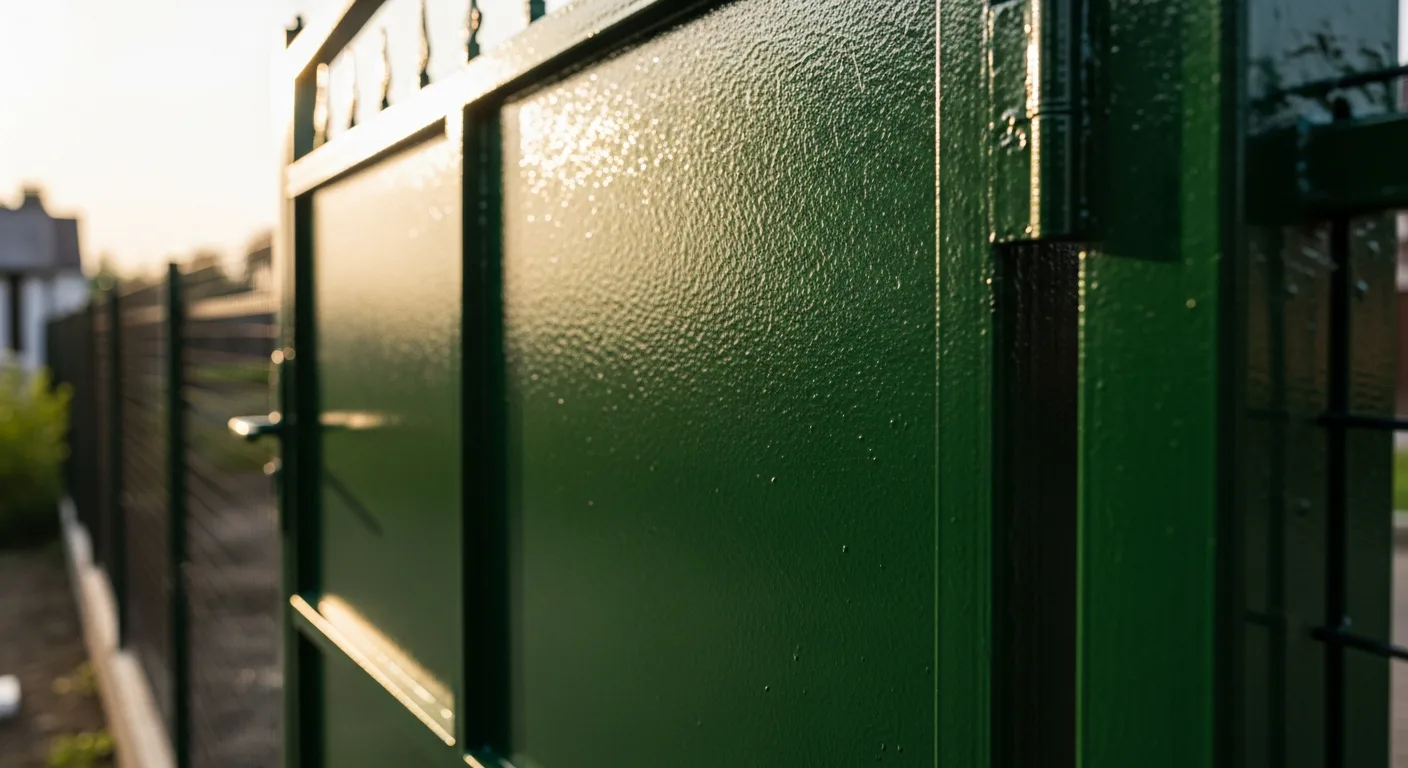
Hammered paint is the lazy craftsman's pick, in the good way. Its texture masks whatever you didn't clean perfectly, and it grips metal hard. For an old wrought-iron fence I almost always point people to it. Alkyd enamel looks better on a flat surface but it's fussier about prep and yellows over time in the sun.
Paint above freezing and in dry weather. If the metal has baked hot in the sun, wait, because paint curdles and bubbles on a scorching surface. To work out how much you need for a gate or fence, the coverage calculator saves you a mid-job run for a second can.
Radiators need heat-resistant paint only
This is where beginners trip up most. They paint a radiator with regular enamel, turn the heating on, and the paint yellows or even cracks. Radiators get hot, so they need a heat resistant paint rated for warming from +80 °C upward. Ordinary paint can't take it.
Before you paint, the radiator has to be cold and dry. Clean off old drips, degrease, and lay down thin coats, because a thick coat on a warm surface ripples later. A long-handled brush reaches the back of the sections you otherwise can't get to.
Galvanized metal: not every paint sticks
Galvanized metal is its own story. Profiled sheet, gutters, galvanized gates. Zinc is smooth and chemically awkward, and ordinary alkyd enamel won't hold on it, peeling off in plates within a season. Galvanized surfaces need a special bonding primer or a paint marked as suitable for zinc. Just degreasing and brushing on your favorite enamel won't cut it here.
Not sure whether what you've got is galvanized? Easier to ask. The enamels and metal primers that actually fit live in the wood and metal paints category, and rollers and cleaning brushes are in tools.
FAQ
Can you paint over rust without cleaning it?
On light surface rust, yes, with a 3-in-1 paint after degreasing. On heavy flaky rust, no. Clean it mechanically with a brush or grinder first, or the paint falls off along with the loose scale.
What paint do radiators need?
Heat resistant enamel only, rated for warming from +80 °C upward. Regular paint yellows and cracks under heat.
How do you paint galvanized metal?
You need a bonding primer for zinc or a paint marked directly for galvanized surfaces. Ordinary alkyd enamel won't hold on smooth zinc.
Is hammered paint better than alkyd enamel?
Not better, just for a different job. Hammered paint forgives dents and old rust, good for fences and wrought iron. Alkyd enamel gives a smooth color on flat metal.
Stuck on what to grab for your gate or radiators? Drop by our Chisinau showroom or ask on the site chat, and we'll match the primer and enamel to your metal.