Choosing wall colors you won't hate a month later
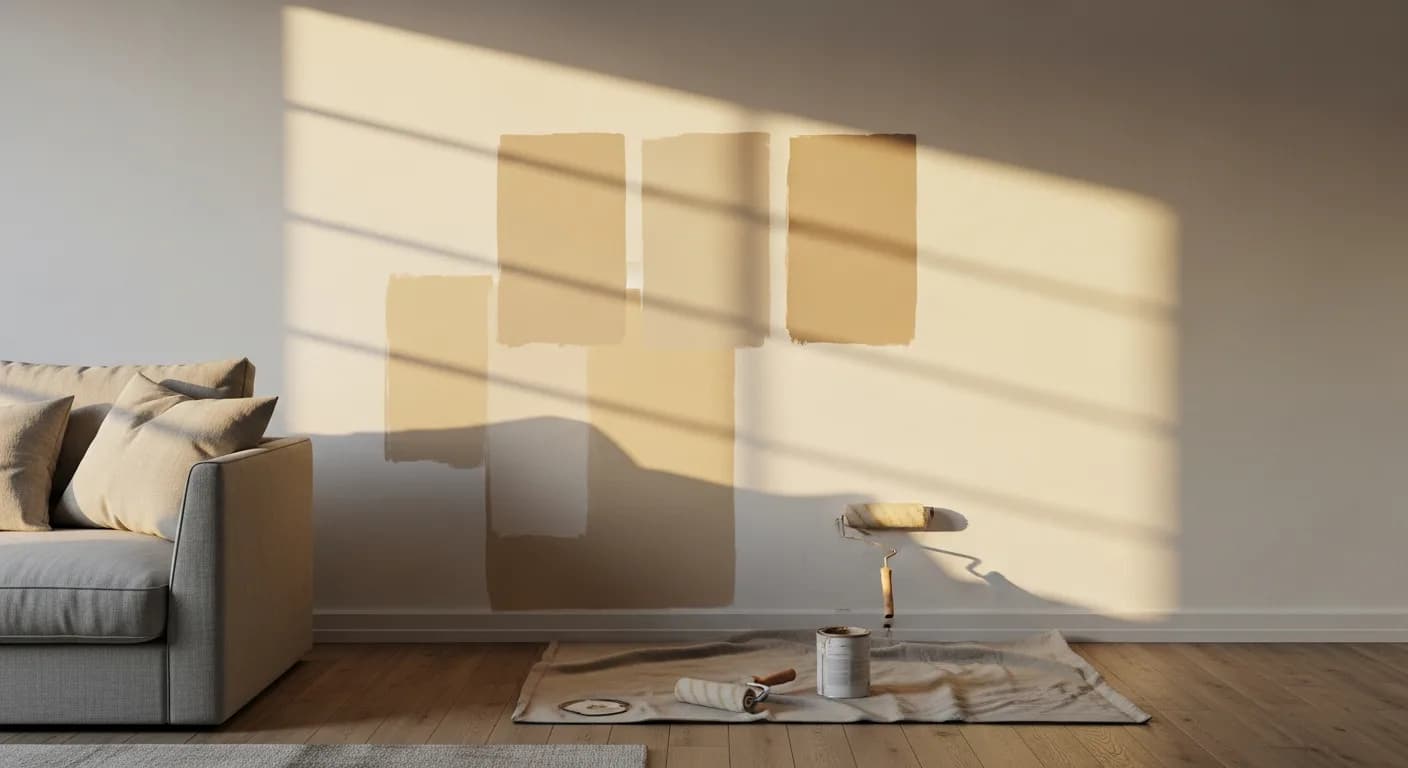
Ever picked a color from a swatch, painted the wall, and by evening it looked like a totally different shade? You're not imagining it. I've done it myself, and I see it on jobs around Chișinău all the time. The color in the fan deck and the color on your actual wall are almost never the same thing. And it's not the paint company's fault.
Let me walk you through why this happens, and how choosing wall colors that still look right after the first month comes down to two things most people ignore: lighting and a proper test patch.
Trust the wall, not the chip
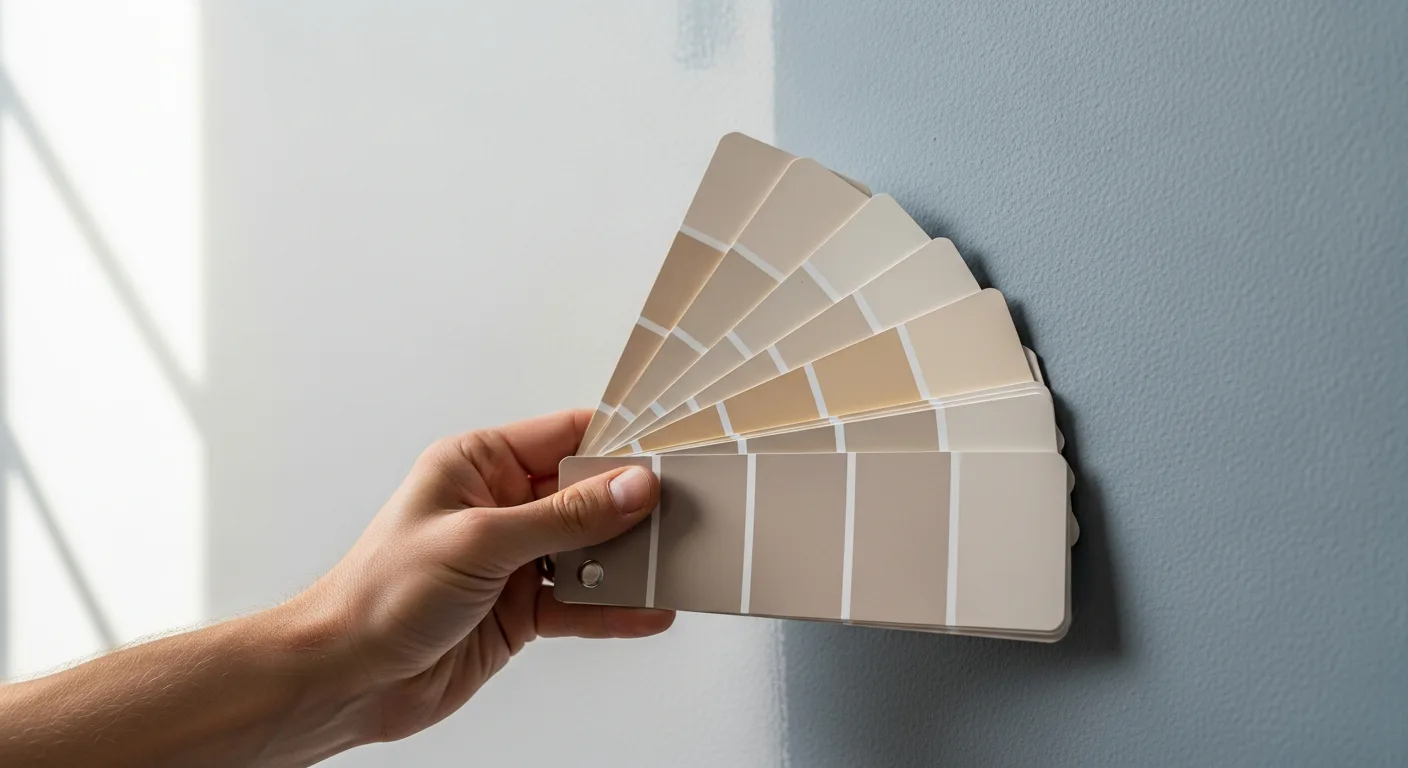
That tiny rectangle in the fan deck and a twelve-square-meter wall are different doses of the same color. On a big surface, the shade always reads richer and darker. A light grey turns cold and concrete-like. A beige drifts toward yellow. That's just how color behaves at scale.
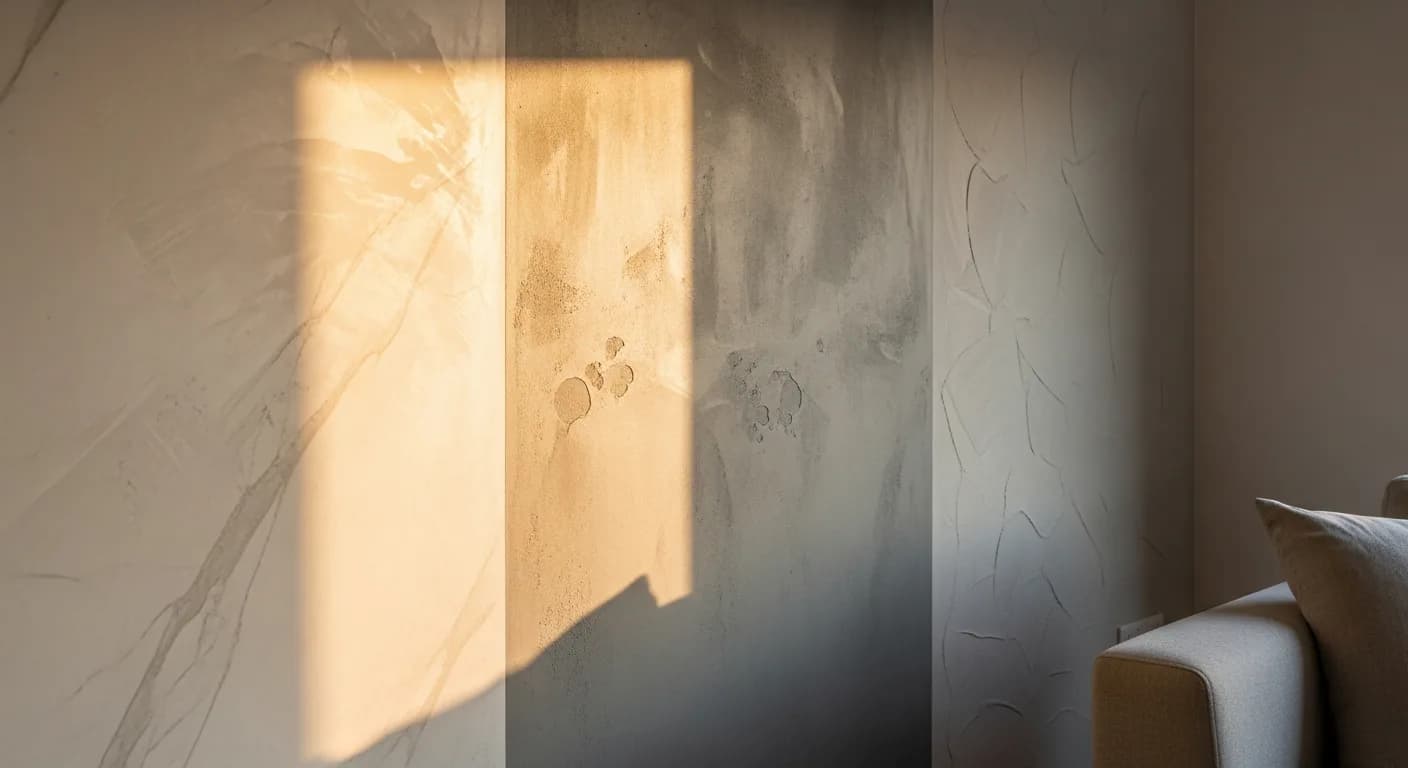
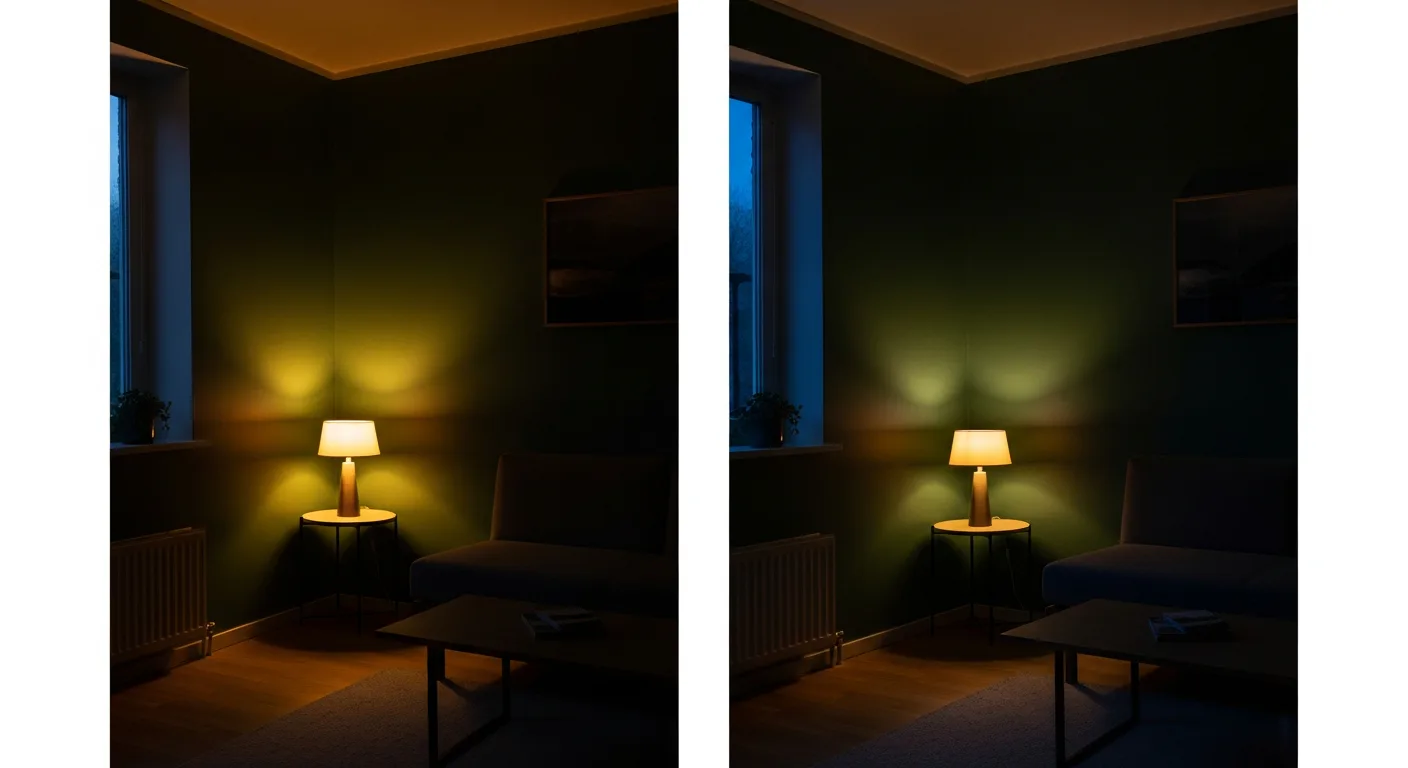
Then there's light. The same grey reads cool and bluish in a north-facing room, warm and almost creamy in a south-facing one. North light stays cold and even all day. South floods the room with warmth, especially toward evening. East catches the morning, west the sunset. The paint doesn't change. The light bouncing off it does.
Your bulbs matter just as much. Warm light, around 2700K, plays nice with beiges, terracottas, warm greys. Cool white, 4000K and up, pulls out the blue and can make a warm shade look muddy. You buy a lovely coffee-with-milk tone and under cool bulbs it goes swampy. Sound familiar?
Paint a sample first
Here's the rule I give every client: don't paint the whole wall straight from a catalog chip. Test it first.
Grab a tester pot, the small size mixed just for trials, and put two coats on a patch about one square meter. Not in a corner. Somewhere visible, where the wall catches daylight. Better yet, do it on two walls that face the window differently.
Now the part people skip. Look at that patch at different times. Morning, midday, evening with the lamps on. The color will shift, and you'll see all its moods before you spend on a full repaint. Give it a day or two. Rushing costs you here, because repainting a room runs far more than a tester pot and a little patience.
One note on drying. Water-based acrylic paint dries between coats in an hour or so, but the true shade only shows once the wall is fully dry. Fresh paint always looks darker and wetter. Don't panic and don't judge the color off a wet coat.
Remember that color moves walls
Color really does change a room's geometry. It's not woo, it's optics.
Dark walls come toward you. The room tightens up and feels cozier, more intimate. Great for a bedroom, a study, a small living room where you want that cocoon feeling. Light shades do the opposite. They push the walls out, add air, make the ceiling feel higher. A low-ceiling flat with dark walls turns into a little box, and not in a charming way.
Simple rule for small rooms: keep walls light and bring the character in through furniture, textiles, a couple of accents. A big, tall room only looks better in a deep color.
Skip the all-out bold room
The mistake I fix most often: someone falls for a saturated emerald or a deep terracotta and paints the entire room in it. A month later the color presses on them. Living inside one intense block of color is tiring. The eye never gets a rest.
What works is a neutral base plus accents. Three walls in a calm tone (warm white, soft greige, pale sand), the fourth as an accent in the color that grabbed you. Or keep the walls neutral and carry the color into curtains, a rug, a chair, the art. The room breathes, and swapping an accent a year later is easy. New curtains, new room. No repainting.
If you want something bolder, start with one accent wall behind the bed or the sofa. It's the safest way to test a color without betting the whole room on it. I covered picking the right paint for the job over in the interior paint guide.
Get it machine-tinted, not eyeballed
I'll be a stickler here, and for good reason. Machine tinting from a recipe is the only way to get a color you can repeat.
The tinting machine mixes pigments to an exact formula and saves the recipe. Run short on paint, need a second batch next week, and you'll get the same mix down to the drop. Eyeballing it, pouring colorant from a bottle and stirring with a stick, never lands the same twice. Touch up a corner and it'll glow a slightly different shade. I see these ghost patches on walls constantly.
Machine tinting also matches your sample by code. You pick the shade, note the fan-deck number, and the paint comes back exactly that. We do the tinting for your volume and surface right in the showroom, and we'll flag the coverage too. For a rough liter estimate, the coverage calculator works it out by area and paint type.
Dark colors are a different job
If you commit to a deep, saturated shade, plan for more time and more paint. Dark and intense colors often need a third coat. Two won't lay down evenly, and you'll get patches and show-through. That's extra paint and another drying day between coats.
Prep gets stricter too. On a dark wall every dent and every unfilled bump shows. Under a saturated color the surface gets leveled more carefully, and sometimes the primer is tinted toward the paint shade so a white base doesn't peek through. Deep tones also sit beautifully on a decorative finish, where the texture hides small flaws and catches the light on its own.
FAQ
How much paint do I need for one wall?
Depends on coverage (usually 7-9 m² per liter) and coat count. For a dark color budget three coats, for a light one two will do. The site calculator pins it down by area.
Which colors make a room look bigger?
Light, slightly cool ones: warm white, pale greige, soft blue. They reflect more light and push the walls out. Dark shades do the reverse and make the space feel snug.
Can I match paint from a photo or a sample?
Not from a photo. Screens lie about color. A physical sample though (a scrap of wallpaper, a cap, a piece of fabric) lets the operator match a close shade. Bring the sample to the showroom.
Why is the paint darker on the wall than in the catalog?
Big surface, the light, and your bulbs. A small chip and a whole wall always read differently. That's exactly why you test on site.
Drop by any of our Chișinău showrooms with a photo of the room or a sample, and we'll pick the shade and tint it for your volume on the spot. Or ask us in chat if you're stuck between two colors.