Venetian, concrete or structured: picking decorative plaster
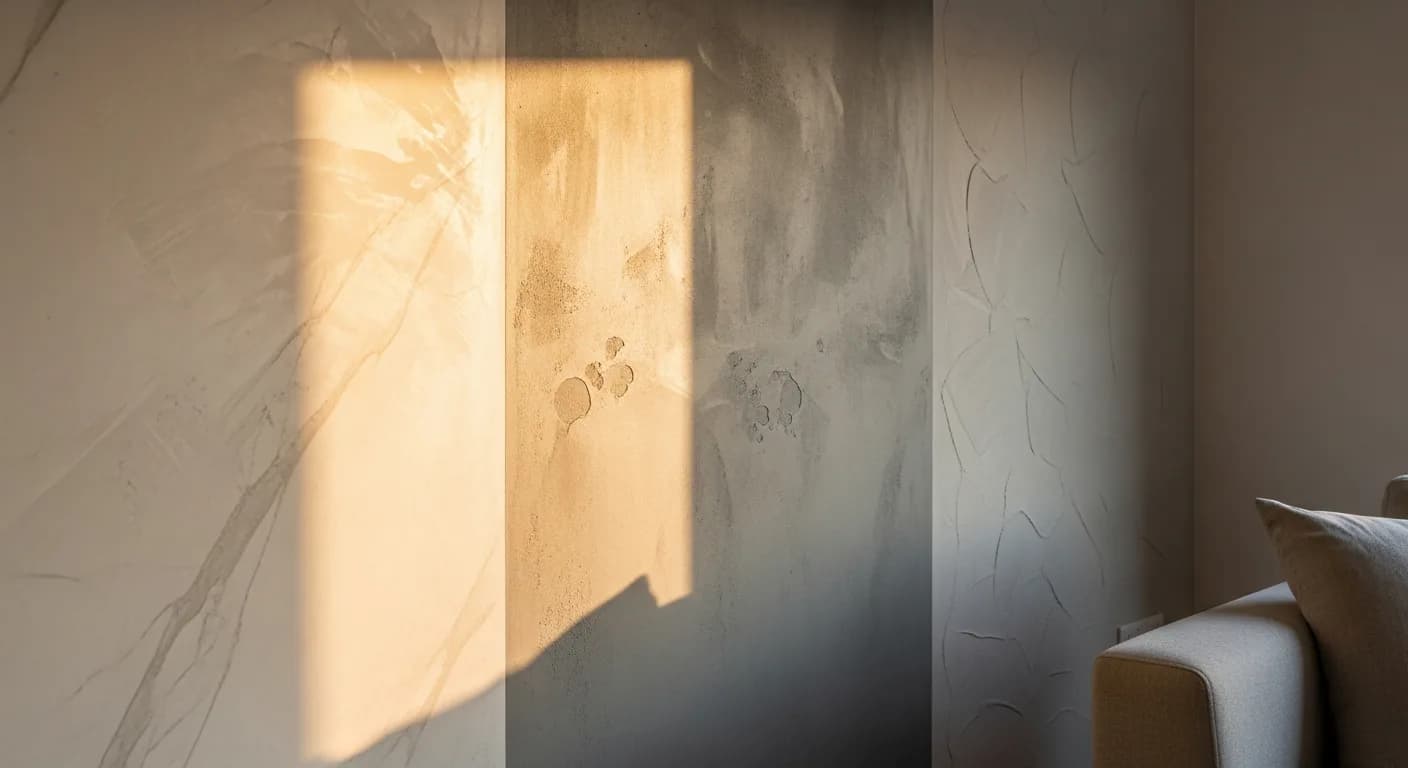
Want to know what actually wrecks a room? Not the colour. The finish, chosen on a whim. Venetian plaster in a loft looks like a tuxedo at the beach, and raw concrete in a neoclassical room kills every bit of moulding around it. I run interior projects in Chisinau, and I see this slip on finished walls all the time: someone falls for a Pinterest shot, orders the material, then the wall fights with everything else in the room.
Decorative plaster isn't a vague "expensive and pretty" choice. It's a specific effect for a specific style. Let's go through three workhorses that genuinely live in Moldovan flats, and I'll tell you honestly where you can DIY and where you shouldn't even start without a pro.
Venetian plaster: classic, neoclassical, anything with depth
Venetian plaster gave us the marble effect long before anyone faked it with a print. Thin, semi-transparent layers, burnished with a trowel, then wax on top, and the wall starts playing with light like real stone. The depth shows up because light passes through the upper coats and bounces off the lower ones.
Where does it belong? Classic, neoclassical, art deco. Any room that already has mouldings, a cornice, serious furniture. Venetian plaster brings that richness a flat paint simply can't fake.
Now the blunt part: you won't lay it yourself. This isn't a watch-a-clip-and-go job. Venetian plaster goes on in several trowel passes at a sharp angle, with pigment dragging, polishing and a final wax. One wrong press and instead of marble you get muddy streaks. I've watched people try to save money and then pay twice, once for the redo and once in frustration. The venetian effect is a craftsman's turf. Full stop.
Concrete effect: loft, minimalism and calm brutality
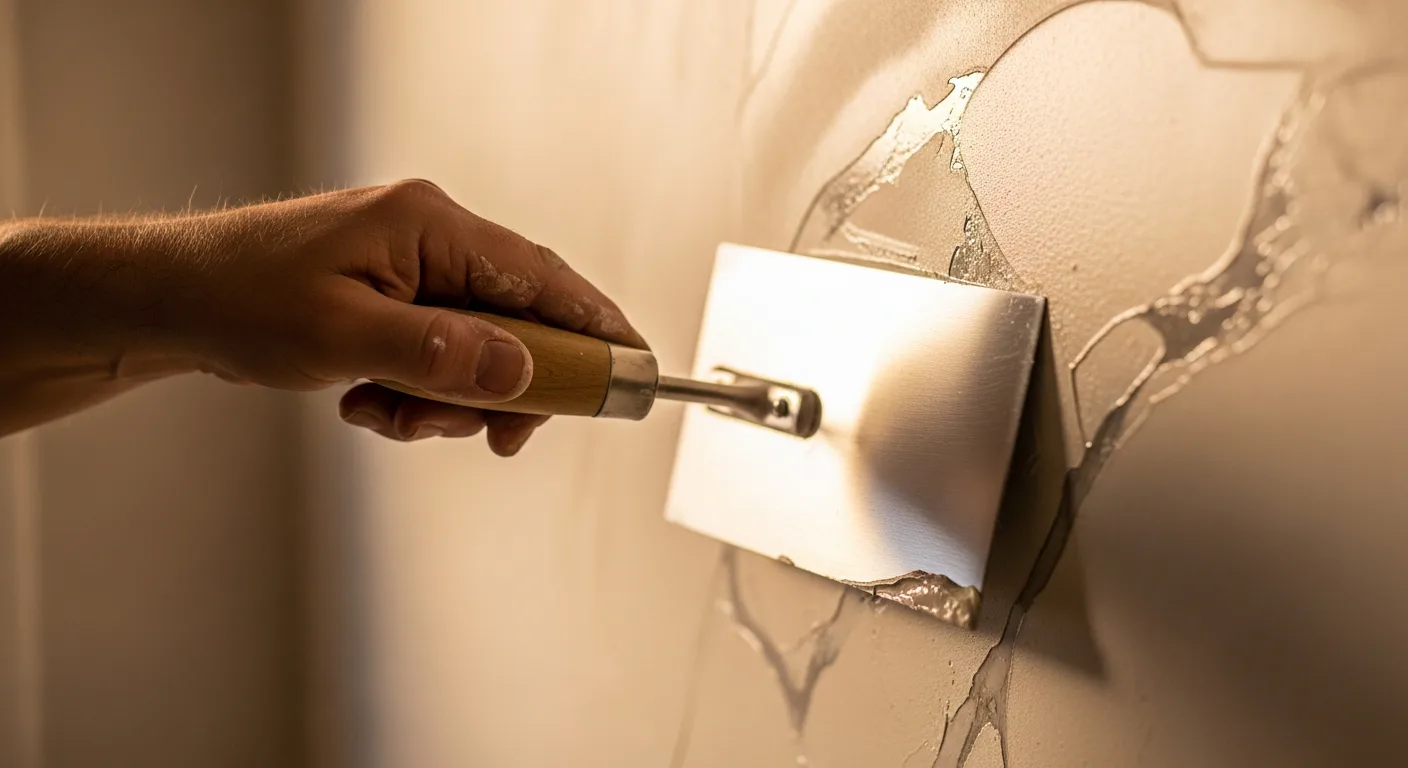
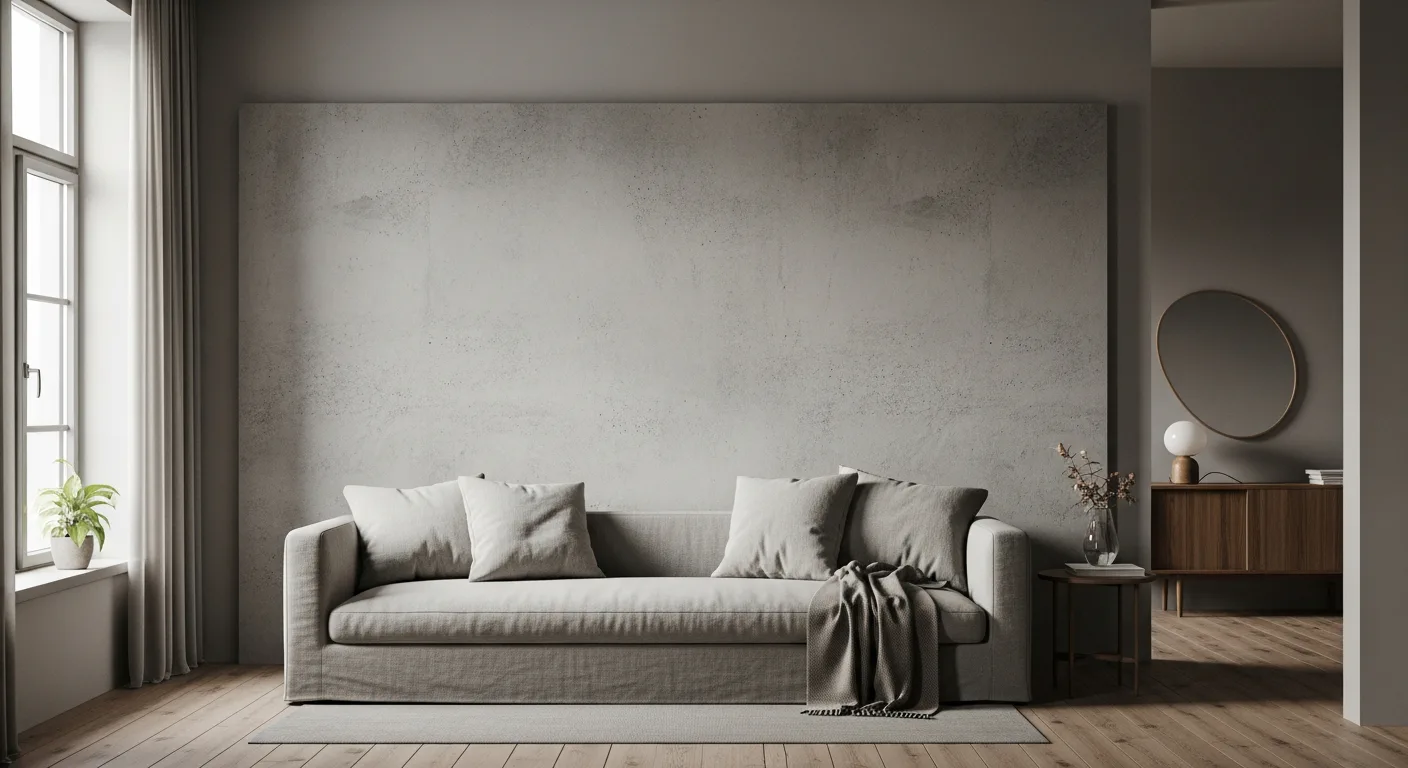
Concrete-effect plaster is the opposite of venetian in temperament. A matte, slightly rough surface, cool grey tones, sometimes with faint blotches and drips. No sheen, no ceremony. Just the honesty of texture.
This is the language of lofts and minimalism. Exposed pipes, black metal, raw wood, big windows, and a concrete wall ties them into one story. It works in Scandinavian rooms too if you pick a light grey. In an open kitchen or a hallway, concrete-effect walls read as expensive precisely because they hold back.
Can you do it yourself? Here things ease up. Modern concrete effects often come as ready pastes you spread with a trowel or float in one or two coats, then tint and seal with varnish. A careful beginner with steady hands can manage a small wall over a weekend. But make your first pass on a scrap of drywall in the closet, not the main living-room wall. You have to feel concrete texture with your hand, and the first try usually comes out clumsy.
Structured plaster: the everyday all-rounder
If venetian is a night out and concrete is an art statement, structured plaster is your work jeans. It's about texture: bark, lamb, waves, fine roughcast. The grain in the mix creates relief that hides wall imperfections and forgives an unsteady hand.
That's why I recommend it most often. It's style-flexible: it suits modern classic, Scandi, or a plain family flat with no pretensions. Want a calm wall in the bedroom, go fine grain. Want a hallway accent, go coarse.
And yes, it's the friendliest option for the solo worker. The grain masks slips, the material makes the texture rather than your virtuosity. You'll want a roller or a float, a deep-penetrating primer for crumbly substrates, and a bit of patience. Before any decorative coat you still prep the wall: level it, prime it. If the wall is shedding, read how to choose paint for your surface, the prep logic is the same.
An honest comparison
So you don't have to hold it all in your head, here's a short table. Price is relative, in symbols rather than money, since real figures depend on brand and surface.
| Effect | Best style | Application difficulty | Price (relative) |
|---|---|---|---|
| Venetian | Classic, neoclassical, art deco | High, pro only | $$$ |
| Concrete | Loft, minimalism, Scandi | Medium, a beginner can do a small wall | $$ |
| Structured | All-rounder: classic, Scandi, family flat | Low, friendly to DIY | $ |
Look at that difficulty column. The more an effect plays with light and depth, the more the price is the craftsman's hands, not the material. With structured plaster you mostly pay for the bag of mix. With venetian, you pay for the experience of the person laying it.
Why decorative plaster costs more than paint (and why it pays off)
Yes, a tub of decorative plaster bites harder than a bucket of ordinary interior paint. Coverage runs higher too: decorative goes on thicker, textured mixes are heavy, and a square metre eats more material. Add the tools: special trowels, floats, sometimes wax on its own. Work out your square metres and coverage with the calculator so you don't buy blind.
But here's what people miss when they only read the upfront receipt. Paint gets refreshed every few years, it fades, scuffs, loses its look near the skirting. Well-laid decorative plaster lives a decade or more without fading or peeling. Waxed venetian honestly only grows more handsome with time. Divide the cost by years of service and the picture flips. The priciest finish is the one you redo.
Care and spot repair
Day-to-day care is simple. Wipe dust off with a soft dry or slightly damp cloth. Waxed venetian takes a gentle wipe, but skip abrasives and harsh chemicals, they strip the protective layer. Deep-relief structured plaster likes a soft vacuum brush, since dust loves to gather in the grooves.
A scratch or a chip? Here decorative plaster has a nice trick. Textured mixes repair locally: blend material, fill, level to the texture, and the patch disappears into the relief. Smooth paint won't do that, every touch-up shows. Venetian is trickier: leave spot repair to whoever laid it, or the sheen and tone won't match.
FAQ
Can I apply decorative plaster over wallpaper?
No. Strip the wallpaper, level the wall, prime it. Decorative plaster is heavy and will drag the paper down with it.
Can venetian really be done DIY if I want it badly enough?
Technically yes, in practice it almost always costs more. Without a trained hand the layers and polishing fail, and the wall needs redoing. It's honestly the one effect I talk people out of doing alone.
What should I pick for a small flat?
Fine-grain structured or a light concrete effect. They don't eat the space or press on you visually. Venetian shines as an accent on one wall, not all of them at once.
Does decorative plaster suit kitchens and bathrooms?
Kitchens, yes, with a protective topcoat. Bathrooms need moisture-resistant mixes and solid sealing, or the steam wins. Check the specific material.
Not sure which effect fits your style? Browse the decorative finishes section or message us in chat with a photo of your room, we'll tell you what works and what to steer clear of. And if you're still on the colour, we have a guide on choosing wall colours.