Facade paint in Moldova: acrylic, silicone or silicate?

Want to know what wrecks a freshly painted facade fastest? Not the rain. Not the sun. It's the swing between them.
Winters in Moldova drop to -15°C, summers hit +35°C. The wall freezes, then bakes. Moisture trapped in the render freezes, expands, then thaws. Every one of those freeze-thaw cycles tears at the coating from the inside. Cheap exterior paint can't keep up with that rhythm, so it fails in two or three seasons. You paint in May, admire it through July, and by September the south wall is already flaking.
So let's figure out which facade paint actually survives Moldova's climate past year five, and why choosing between acrylic, silicone, and silicate isn't really about the price on the tin.
Read your substrate first
You don't pick paint from a catalogue. You pick it for the wall. Start here.
Look at what the facade is made of. Aerated block, brick under render, old lime finish, mineral plaster, bare concrete - the material decides what bonds and what peels. Mineral substrates (lime, silicate render, old mineral paint) play by their own rules, and standard acrylic sometimes argues with the surface chemistry.
Next, the old coating. If there's already a dense acrylic film on the wall, putting silicate paint over it makes no sense; silicate only works on mineral. Acrylic and silicone, on the other hand, sit fine over sound old acrylic.
Run your hand over the wall. Does it chalk, dust, crumble under your fingers? That's a weak substrate. Prime it, or the paint drags the loose top layer off with it. Same logic applies indoors, which I covered in do you need primer.
Acrylic, silicone, silicate - what's the difference
Three types that genuinely hold up outside. Alkyd paints lose on lifespan to all three, so they're not in the running.
| Type | Strength | Weakness | Best for |
|---|---|---|---|
| Acrylic | price, colours, easy to apply | medium vapour permeability | concrete, smooth cement render |
| Silicone | breathes + sheds dirt | costs more | walls that need to breathe, dusty streets |
| Silicate | bonds into the mineral, very durable | mineral substrates only, fussy | lime, silicate render, restoration |
Acrylic exterior paint is the workhorse. Good colour retention, weather resistant, easy to roll on. Its weak spot is vapour permeability, which sits in the middle. On dense concrete that doesn't matter. But on a wall pulling moisture from inside, a dense acrylic film can trap the vapour, and in winter the freeze-thaw cycles start lifting it.
Silicone exterior paint fixes exactly that pain. Silicone lets water vapour escape outward while shedding rain from outside, both at once. The wall dries, the rain runs off. Add the dirt-shedding effect: dust and soot grip less, and rain washes the wall for you. On a facade near a road, that means you wash it far less often, and a light colour stays light longer. Yes, silicone costs more than acrylic. But price it over 8 to 10 years instead of one tin, and it often wins.
Silicate is its own story. It doesn't form a film. It reacts chemically with the mineral substrate and fuses into it. Lifespan is huge, vapour permeability maximal. But it's picky: mineral walls only, never over old acrylic, demanding about weather during application. It's the choice for lime render and restoration work, not your average new build.
Prep the facade - this is where most jobs fail
On jobs around the city I see the same thing over and over: people save on prep and pay for it with a repaint. Paint isn't glue. It only grips what's underneath it.
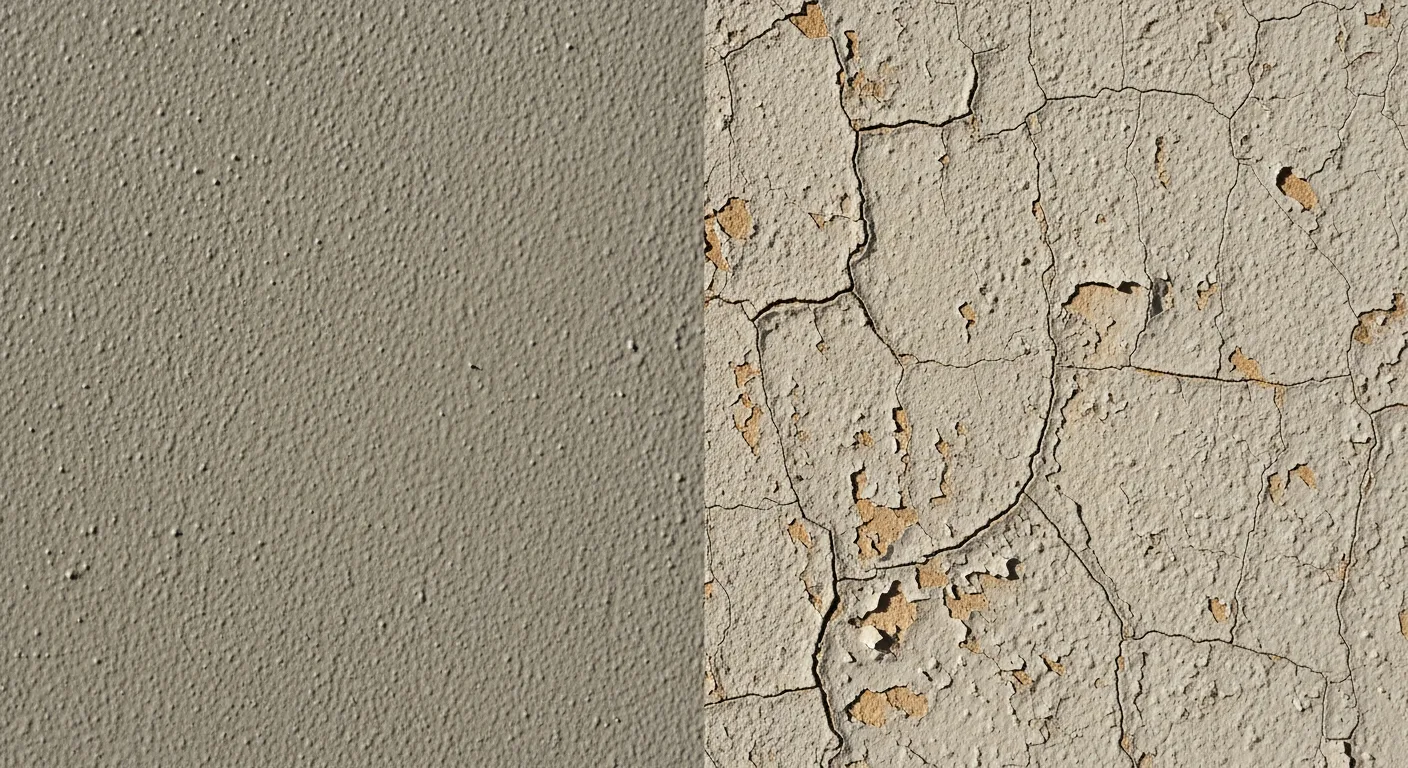
Fix the cracks. Hairline cracks in render are normal, but wide ones need opening up, priming, and filling with repair mortar. Paint over a crack as-is and it'll telegraph through after one winter, pulling the coating with it.
Strip anything loose. Flaking old paint, hollow-sounding render, efflorescence, mould on the north side. Painting over a loose layer is pointless: new paint holds exactly as well as whatever sits beneath it.
Prime it. A deep-penetrating primer firms up a weak substrate and cuts paint consumption, since the wall drinks less. For facades, match the primer to the paint type; silicate needs silicate primer, and there's no improvising that part.
When to paint, and when to wait
Here's the answer to that May-to-September mystery. Most of the time it's not the paint, it's the weather during application.
Surface and air temperature should usually sit somewhere around +5 to +25°C, but check the exact range on your specific tin since it varies by maker. And the common mistake: people paint in +30 heat under full sun because the weather's nice. Don't. On a baking wall the paint skins over on top before it bonds to the substrate. Looks great, peels off in sheets a couple of months later.
Paint the shaded side and chase the sun around the house. The east wall is shaded in the morning, the west in the evening. Keep it out of direct midday sun.
Humidity matters too. Fresh rain, dew, fog - let the wall dry. Paint won't bond to a damp substrate. And don't start if rain's coming before the coat has set.
Why paint facades in spring? It makes sense: warm, dry, with time before winter for the coating to cure. Sound idea. The trouble is that in a rush people ignore the morning chill and the midday heat, the two things that quietly kill adhesion.
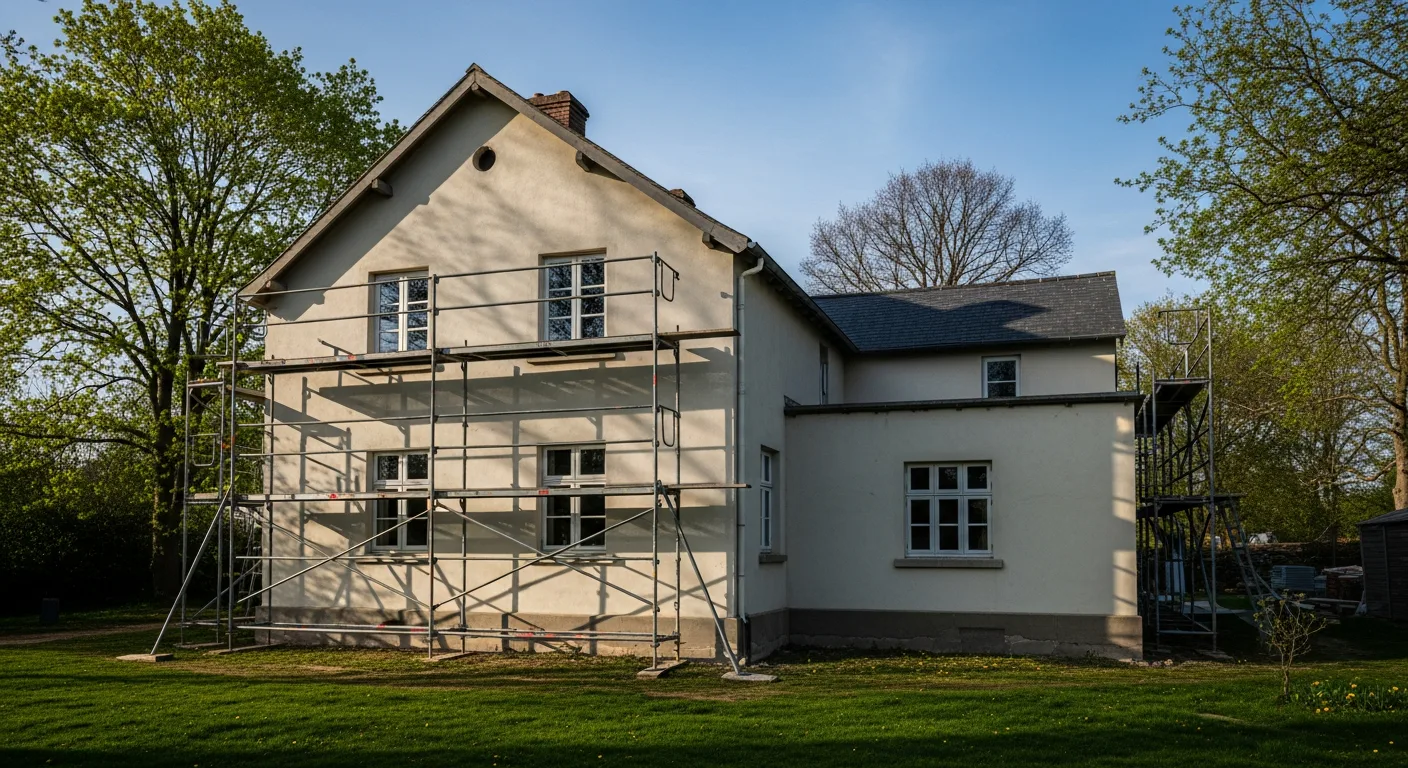
Mistakes that cost you a repaint
Here are the frequent ones. Each looks minor alone. Together they're that September peel.
- Painting in heat under sun - skin on top, no bond underneath.
- One coat instead of two to save money. Saturated and dark colours often need a third coat, or the colour goes patchy and coverage suffers.
- Skipping primer on a chalky wall - the paint leaves with the dust.
- Cheap coating on a roadside house - grime works in, you scrub it every season.
- Silicate over old acrylic - won't fuse, peels.
- Painting before rain - the fresh coat washes away.
Working out how much paint to buy ahead of time saves you a mid-wall dash to the shop and three leftover tins. The logic is in how much paint you need, and you can run your wall area and coverage through our calculator.
FAQ
How long does facade paint last?
A quality acrylic or silicone lasts 7 to 10 years if the wall is prepped and you painted in the right weather. Cheap coatings in Moldova's climate fail in two or three seasons.
Acrylic or silicone for a facade?
Acrylic if the substrate is dense (concrete) and the budget is tight. Silicone if the wall needs to breathe and the house sits on a dusty road. Silicone costs more but needs washing less often and lasts longer.
Can you paint a facade in summer?
Yes, but not in the heat under direct sun. Paint the shaded side, within the temperature range on the tin, on a dry wall. Early morning and evening beat midday.
Do you need to prime a facade before painting?
Yes, especially on a chalky wall or fresh render. Primer firms up the substrate, evens out absorption, and lowers paint consumption. Match the primer to the paint type.
Not sure what suits your wall? Snap a photo of the facade and drop by one of our Chisinau showrooms, or ask us in chat. We'll match it to your substrate and budget.